
Last updated November 23, 2026
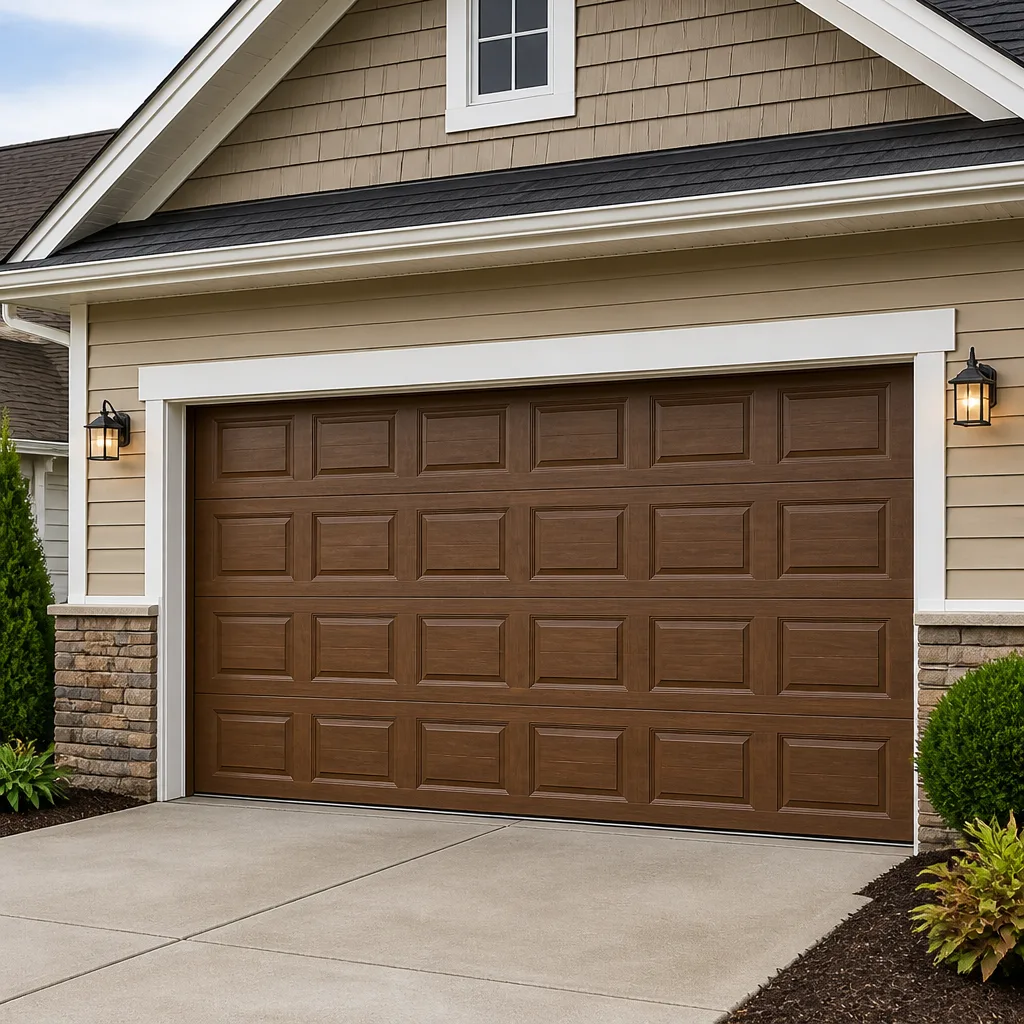 Raised-panel steel
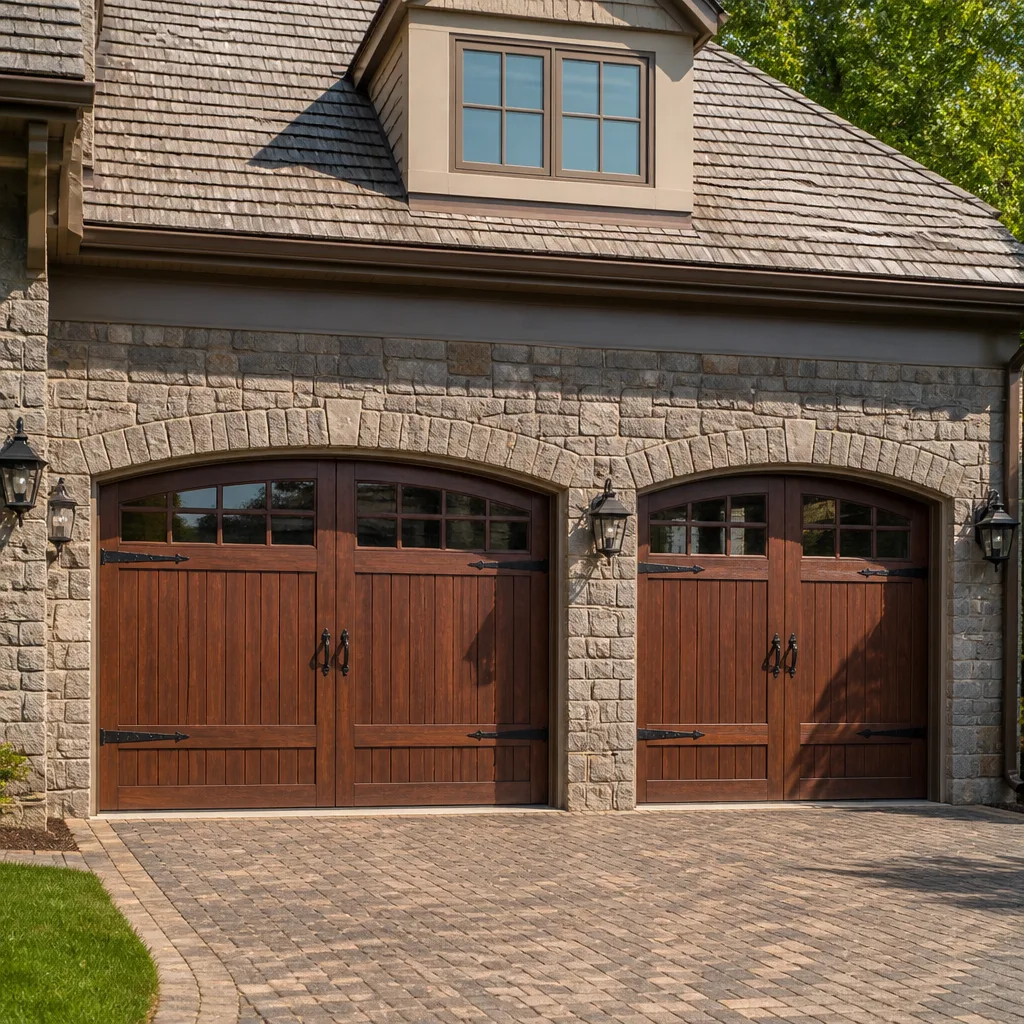 Carriage house
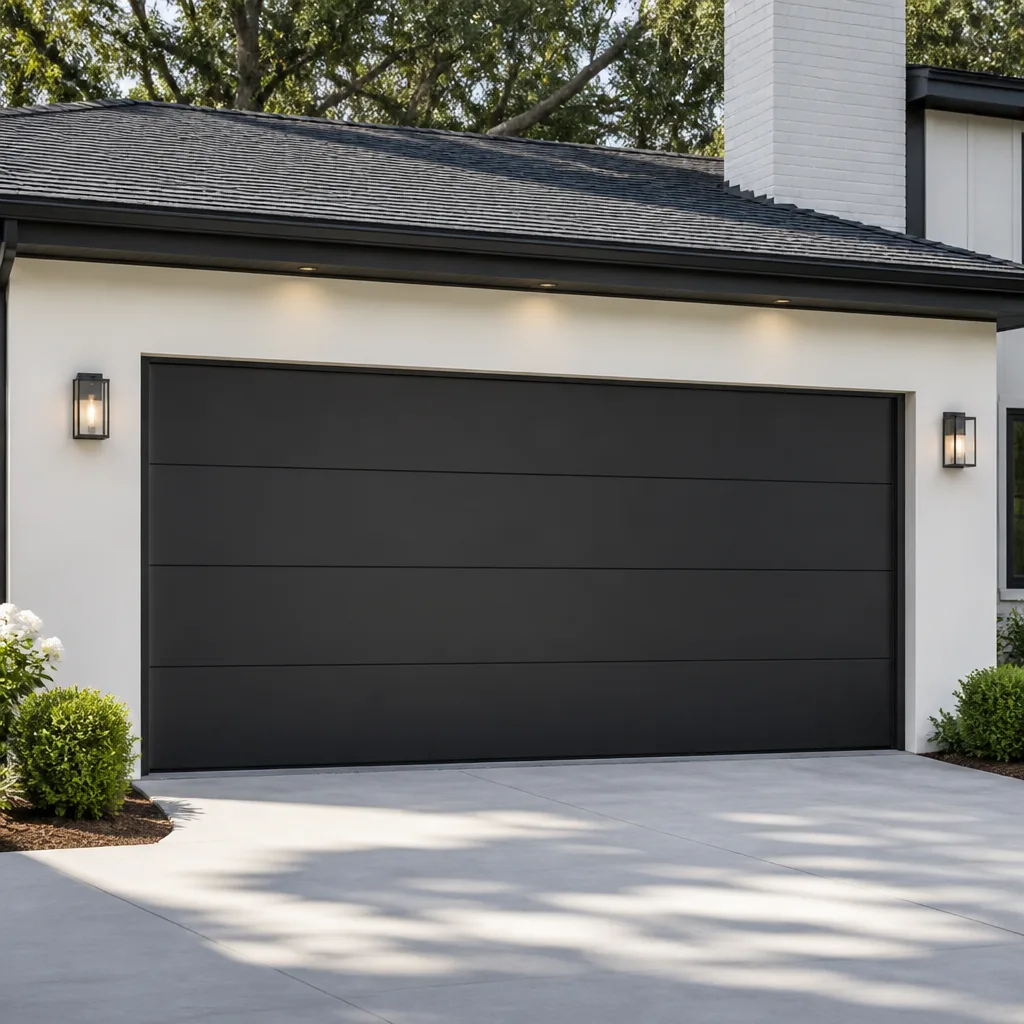 Modern flush
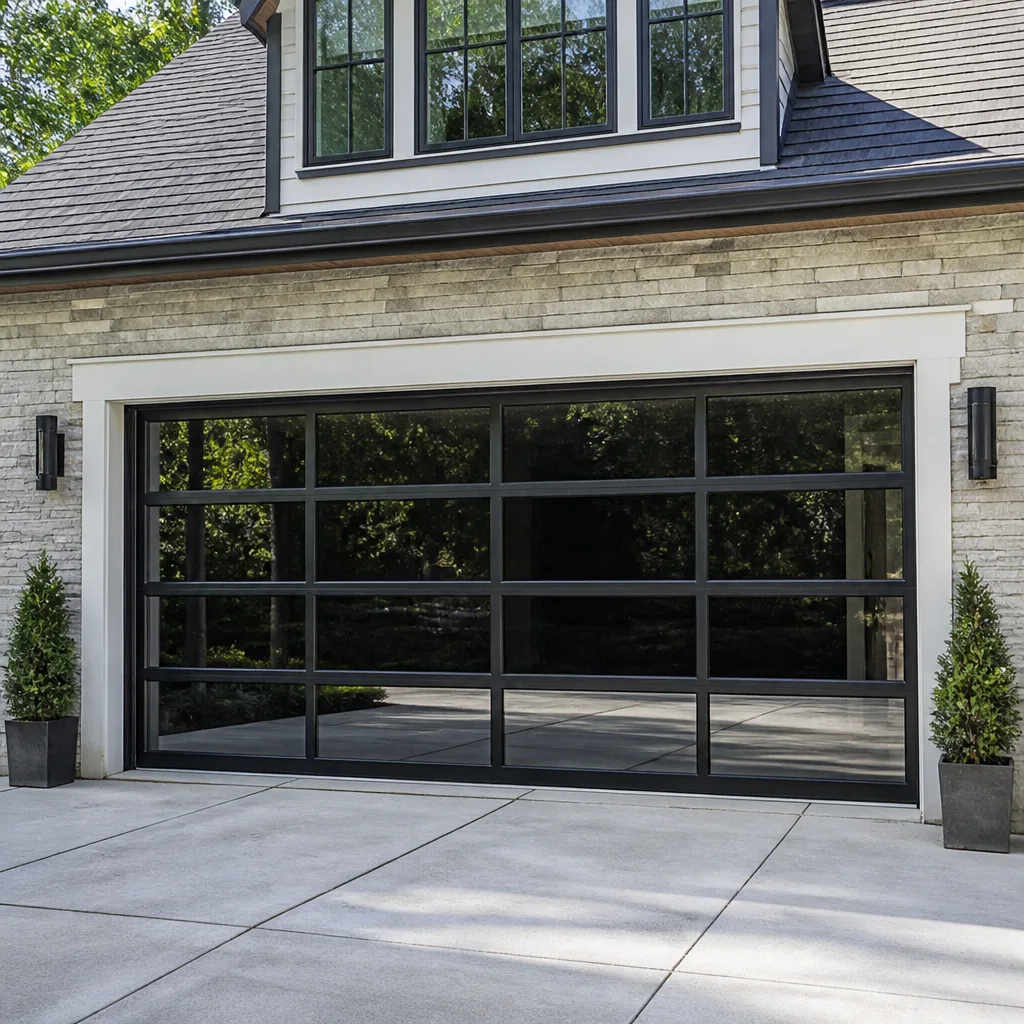 Full-view glass
 LiftMaster openers
 Chamberlain openers
Full 25-point door and opener safety check with every visit - springs, cables, rollers, tracks, and your LiftMaster or Chamberlain opener included
You get a price before we start. It does not change when the pro arrives.
Get your free estimateGarage Door Emergency Preparedness Guide for Stonecrest Homes
The red cord hanging from your garage door opener is not a panic button. It’s a manual release, and pulled at the wrong moment, it can turn a stuck door into a dropped one. During storm season in Stonecrest, when the power flickers and the opener goes dead, that’s exactly the moment people reach for it without thinking. A door with a healthy spring is heavy but manageable. A door with a broken spring is a 300-pound slab with nothing holding it up. This guide walks you through both scenarios, plus the mechanical failures that leave a door hanging open or trap a car inside. Twenty minutes of reading now saves you the worst version of that night later.
Quick Answer
Garage door emergency preparedness in Stonecrest comes down to two failure types: power loss during a storm and mechanical failure (broken spring, snapped cable, door off its tracks). Prepare by learning the manual release procedure, keeping a backup plan for a dead opener, knowing how to secure an open door, and having our number ready before you need it. Call (877) 792-7296. We answer 24/7, with fast dispatch from 7am to 7pm, Sunday through Friday.
Styles & brands we work with
- Raised-panel steel
- Carriage house
- Modern flush
- Full-view glass
- LiftMaster openers
- Chamberlain openers
Table of Contents
- How Does the Manual Release Work, and When Should You Actually Pull It?
- Broken Spring Emergency: The Difference That Changes Everything
- How Do You Secure an Open Door During a Storm?
- What Information Does a Technician Need to Triage Your Call?
- Battery Backup Openers and Stonecrest’s Storm Patterns
- What to Do When a Door Comes Off Its Tracks
- Trapped Car, Open Door: Two Failure Modes to Plan For
- The 20-Minute Preparedness Exercise
How Does the Manual Release Work, and When Should You Actually Pull It?
The manual release cord disconnects the door from the opener’s drive carriage so you can lift it by hand. On a healthy door, that’s the correct move during a power outage: you pull the cord, lift the door, and drive out. On a door with a broken spring, pulling that cord removes the only thing holding the door up. The door can slam down. That’s the distinction most homeowners never hear until it matters.
Here’s how the release works under normal conditions, meaning the door is intact and the spring is doing its job:
- Confirm the door is fully closed and nothing is underneath it.
- Pull the release cord straight down with a firm, steady motion until the carriage disengages.
- Lift the door slowly by hand. A properly balanced door should rise with modest effort. If it feels extremely heavy or won’t stay up halfway, stop and lower it. That heaviness is a sign of spring or cable trouble.
- Prop or tie the door in the open position if you need it to stay up, then move the car out.
- To re-engage, close the door fully and pull the cord again, or run the opener until the carriage reconnects.
Under a broken-spring condition, the procedure changes. Don’t pull the cord. Secure the door where it is, keep people and pets clear, and call us. Our technicians have up to 11 years of experience, and garage door spring repair is one of our named specialties for a reason: high-tension springs and cables are genuinely dangerous, and this is not a component to troubleshoot yourself. If you’re unsure whether your spring is intact, treat the door as if it isn’t.
Broken Spring Emergency: The Difference That Changes Everything
A broken spring announces itself. There’s usually a loud bang from the garage, and afterward the door feels impossibly heavy or won’t open at all. Sometimes the opener runs and strains but nothing moves. In a torsion setup, the shaft spins freely with no tension; in an extension setup, you can often see the snapped spring hanging loose on its track. Either way, the door has lost the counterbalance that makes it liftable.
What that means for your preparedness:
- Never let the opener try to lift a door with a broken spring. The motor will burn out straining against a dead weight, turning a spring repair into a spring-and-opener repair.
- Don’t pull the manual release. With no spring holding tension, the door can drop the moment it’s disconnected.
- Keep the door fully closed if possible. That’s the safest position and keeps the garage secure.
- Don’t attempt to wind, unwind, or remove a torsion spring. These store enormous energy, and an untrained hand on a winding bar can be seriously hurt.
Spring replacement is typically done as a matched pair, since both springs wear at the same rate. Repairing one and leaving the other is a short-term fix that usually leads to a second call. We work on doors from Clopay, Amarr, Wayne Dalton and Raynor and openers from LiftMaster, Chamberlain, Genie and Craftsman, so whichever system is on your Stonecrest home, we know how it’s built before we arrive. Broken spring? That’s our specialty.
How Do You Secure an Open Door During a Storm?
A door stuck in the open position during a storm is a security problem first and a water problem second. The goal is to get it closed or blocked off before wind-driven rain gets in and before the open bay invites attention. If the opener has failed but the door is otherwise intact, you can usually close it manually by disengaging the carriage and lowering it by hand. Lower it slowly and let it settle fully into the closed position.
If the door won’t close at all, work in this order:
- Move anything valuable or water-sensitive out of the garage first.
- Block the opening from the inside with whatever is solid and available, and keep the interior door to the house locked and closed.
- If the door is hanging partially open and unstable, don’t stand under it. Clear the area and keep it clear.
- Call us with the door’s position and what you can see. We can talk you through making it safe while a technician is dispatched.
Stonecrest’s storm season brings the outages and wind that cause most of these calls, and it also brings the question of whether the door itself can take the load. Older single-panel doors and doors with fatigued hardware are more likely to bind or drop a roller under stress. If your door has been sluggish or noisy for a while, that’s the warning to act on before the next storm, not during it.
What Information Does a Technician Need to Triage Your Call?
The faster we understand the failure, the faster the right technician arrives with the right parts. Emergency service is a core part of what we do, not an upsell, and it works best when the call starts with good information. Before you dial, take thirty seconds to gather these details.
- What failed: spring, cable, track, opener, or the door itself.
- Door position: fully closed, fully open, or stuck mid-travel.
- Door type: sectional, single-panel, or carriage style, and roughly how wide.
- Opener brand: LiftMaster, Chamberlain, Genie or Craftsman if you can see it on the unit. Smart openers with myQ need different diagnostics than older chain-drive units.
- Door brand, if visible: a sticker or stamp from Clopay, Amarr, Wayne Dalton or Raynor helps us match hardware.
- What you’ve already tried: whether anyone pulled the release cord, ran the opener repeatedly, or attempted a fix.
- Access and safety: whether a car is trapped, whether children or pets are in the garage, and whether anything is under the door.
One of the most useful things you can tell us is what you haven’t done yet. A door that’s been left alone after a spring failure is usually a straightforward repair. A door that’s been force-lifted, had its opener run for ten minutes, or been partially disassembled takes longer to sort out. Call (877) 792-7296. We answer 24/7, and fast dispatch from 7am to 7pm gets a technician moving.
Battery Backup Openers and Stonecrest’s Storm Patterns
The single best upgrade for storm season is a battery backup opener. It keeps the door working when the grid goes down, which means you’re not disengaging the carriage and lifting by hand in the dark, and you’re not worrying about the garage sitting open while the neighborhood waits for power. For homes that see repeated outages through the season, it turns a recurring disruption into a non-event.
What to look for when you’re planning one:
- Battery type and runtime specs. Ask how many open/close cycles the backup provides and how long it holds charge. A backup that gives you a handful of cycles still gets your car out and the door closed.
- Battery health monitoring. Some units alert you when the battery is aging. A backup that silently died two years ago is worse than none, because you’re counting on it.
- Compatibility with your door. A heavy or high-lift door needs a beefier opener. The unit has to match the door, not the other way around.
- Smart features if you want them. Wi-Fi-enabled openers let you check door status remotely, which is genuinely useful when you’re away and a storm rolls through.
We repair and install across both smart-home-integrated systems and legacy openers, so whether you’re adding a backup to an existing LiftMaster or replacing an aging chain-drive unit, the assessment comes first. Installation is measured and scheduled, not rushed: we spec the opener to your door, order it, and set a date. From the first cable to the final panel, the whole system gets looked at, not just the motor.
What to Do When a Door Comes Off Its Tracks
A door that’s jumped its tracks is one of the few situations where the right response is mostly about not making it worse. A door off its tracks is balanced on hardware that wasn’t designed for that load, and a bent panel under a bent track can turn a recoverable repair into a full replacement. The instinct to push it back into place is the wrong instinct.
What to do:
- Stop the opener. Don’t run it again.
- Keep everyone clear of the door’s path. Don’t stand under it or reach into the track.
- If the door is partially up and sagging, leave it where it is until a technician arrives. Attempting to lower it by hand can drop it.
- If a car is trapped and you must move it, check whether the door can be raised by hand at all. If it binds, stop. A stuck car beats an injured person.
- Call us and describe exactly which side came out and whether any panel is bent.
What not to do:
- Don’t force the rollers back into the track.
- Don’t loosen the track brackets to “give it room.” Those brackets carry the door’s weight.
- Don’t run the opener to see if it fixes itself.
- Don’t try to bend a panel back by hand.
Most off-track situations trace back to a roller failure, a bent track, or an impact. Sometimes the fix is a roller and a track realignment. Sometimes a damaged panel means replacing door sections. We’ll tell you which one you’re looking at.
Trapped Car, Open Door: Two Failure Modes to Plan For
Most garage door emergencies land in one of two outcomes: a car trapped inside, or a door left open to the world. They call for different responses, and both are much easier if you’ve thought about them before they happen.
Trapped car. If the opener has failed and the door is intact, the manual release is your tool, lifted slowly and carefully. If the spring is broken, the door stays closed and the car stays inside until we can get it sorted. Plan a fallback: keep a set of keys somewhere outside the garage, know your alternate route, and make sure anything time-sensitive isn’t locked behind a door you can’t open. If a car is trapped and someone inside needs to move it for an urgent reason, that’s exactly when to call and let a technician walk you through the safest option.
Open door. If the door stuck open and won’t close, the priority is securing the opening. That’s the block-it-off procedure above, plus a call. An open garage is an invitation, and in a storm it’s an opening for water and wind. Treat a door that won’t close with the same urgency as one that won’t open.
Both failure modes get easier with an opener that has a battery backup, a spring that’s been properly maintained, and a number you already have saved. That last one is worth doing today: (877) 792-7296. Emergency service is a real offering here, not a referral queue.
The 20-Minute Preparedness Exercise
Twenty minutes once a year eliminates most of the worst-case outcomes. Here’s the drill, broken into four short checks.
- Find your release cord (2 minutes). Locate it. Read the label on it. Know which way it pulls and remember the rule: only pull it when the door is closed and the spring is intact.
- Test your door balance (3 minutes). Close the door, disconnect the opener, and lift it by hand about halfway. It should rise with modest effort and stay put when you let go. If it’s extremely heavy or won’t hold, it’s out of balance, and that means a spring or cable issue is coming.
- Check the safety reverse (2 minutes). Place a solid object like a brick under the door and run the door down. It should reverse on contact. Some openers also test the photo-eye beam; break the beam and the door should stop and reverse. If it doesn’t, that’s an opener problem to fix before it fails at a bad time.
- Plan the fallback (10 minutes). Save our number in your phone under Garage Door. Know where a spare house key lives outside the garage. Decide who in the household is allowed to touch the release cord, and who isn’t. If you don’t have a battery backup opener, price one out, because it makes everything on this list easier.
Do this at the start of Stonecrest’s storm season, and you’ll be the household that’s calm when the power goes out. If any of the checks fail, that’s an easy call. Our garage door opener repair covers the range of openers in area homes from basic chain-drive units to smart-enabled ones, so a failing unit gets fixed properly rather than limped along.
Common Mistakes to Avoid
- Pulling the release cord before checking the spring. The cord is the last step, not the first. Pulling it on a door with a dead spring drops the door.
- Running the opener to see if it fixes itself. A straining motor against a broken spring or a bound door burns out the opener and can bend panels. Stop, look, call.
- Forcing a door back onto its tracks. The resistance you feel is telling you the door’s weight is on hardware that can’t carry it. Leave it.
- Trying to “adjust” a torsion spring. Springs store enough energy to seriously injure an experienced hand and worse to an inexperienced one. This one genuinely belongs to a specialist.
- Ignoring the warning signs. A door that’s getting heavier, louder, or slower isn’t normal; it’s aging. In Stonecrest storm season, that warning usually arrives before the actual failure, and it’s a lot cheaper to act on it then.
- Assuming the door isn’t fixable because it’s an older brand. Doors from Wayne Dalton and Raynor and older Craftsman openers still have parts available and still get serviced. Don’t replace the whole system for a repairable fault.
- Missing the security half of the problem. A door that won’t close is as much of an emergency as one that won’t open. Don’t wait to call because the door isn’t “broken” in the usual sense.
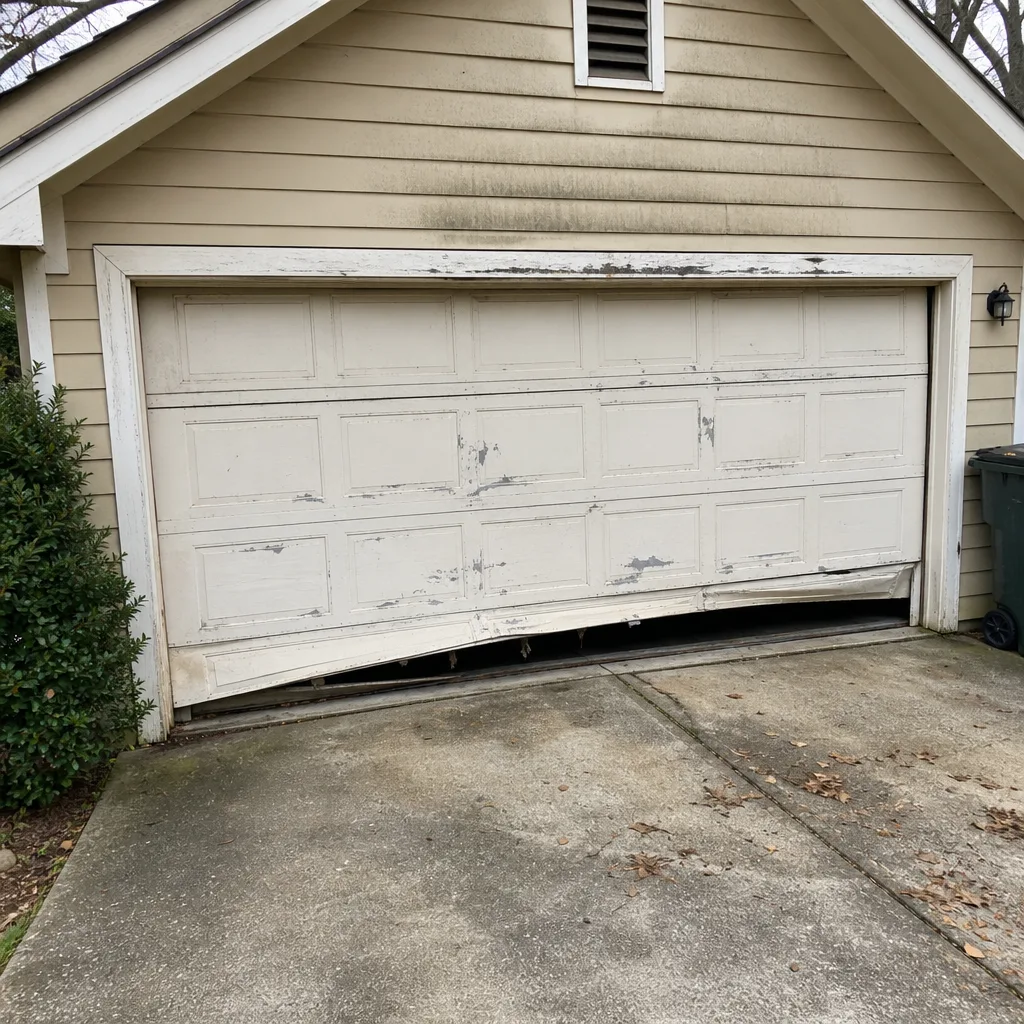
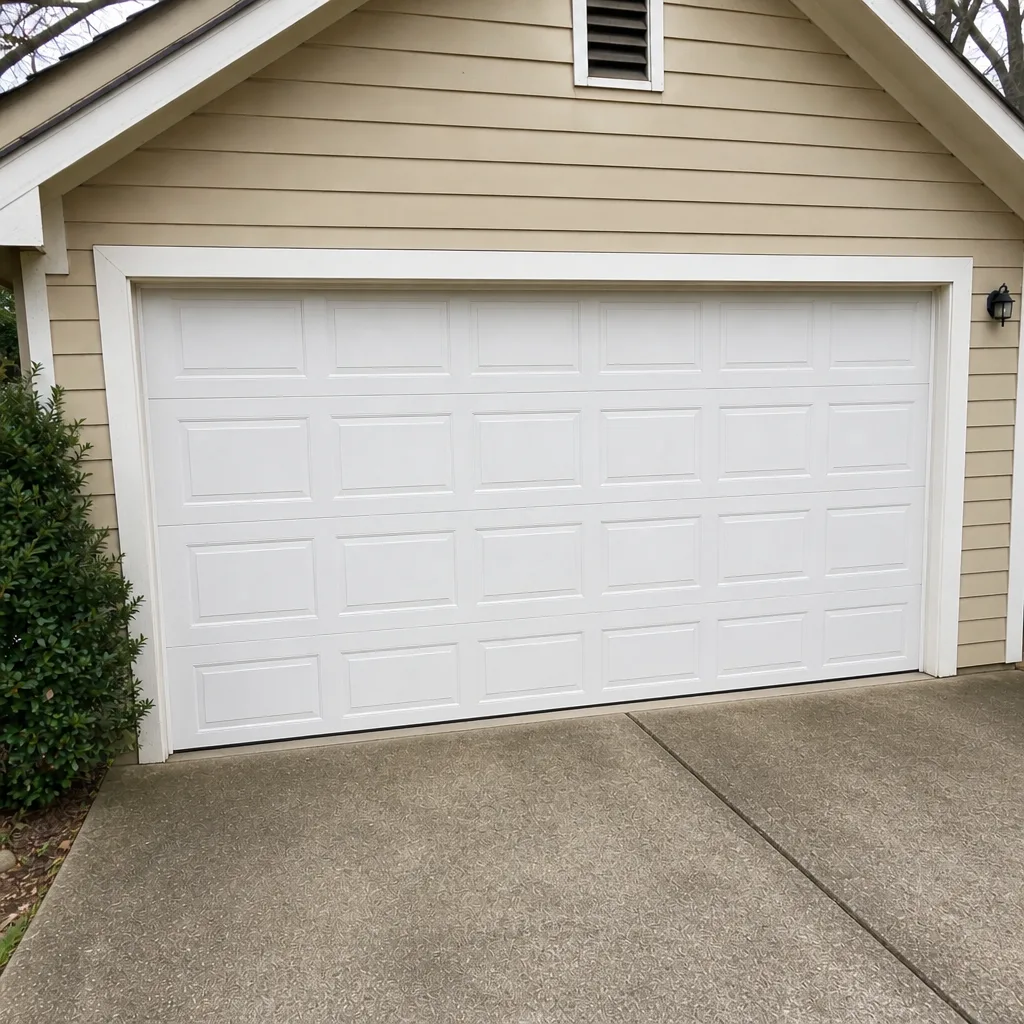
See the difference
 Before
 After
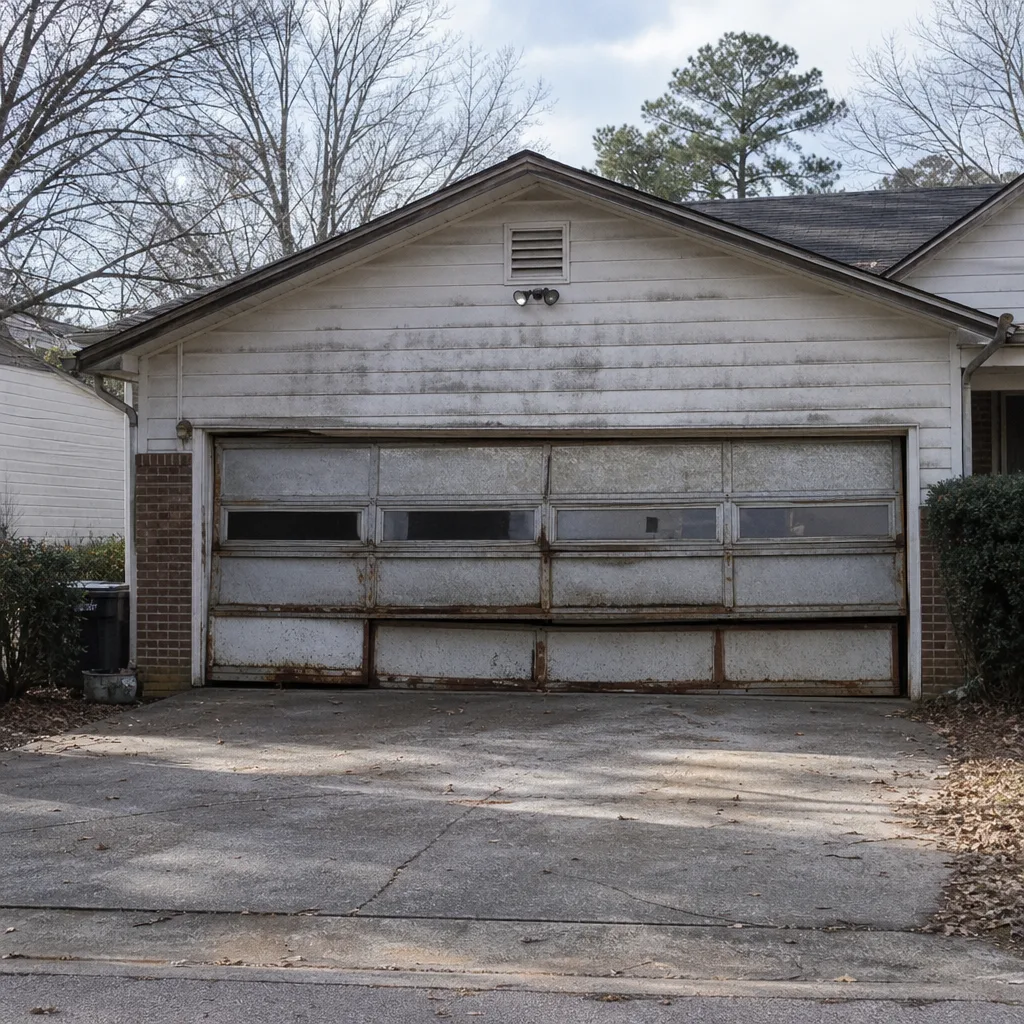 Before
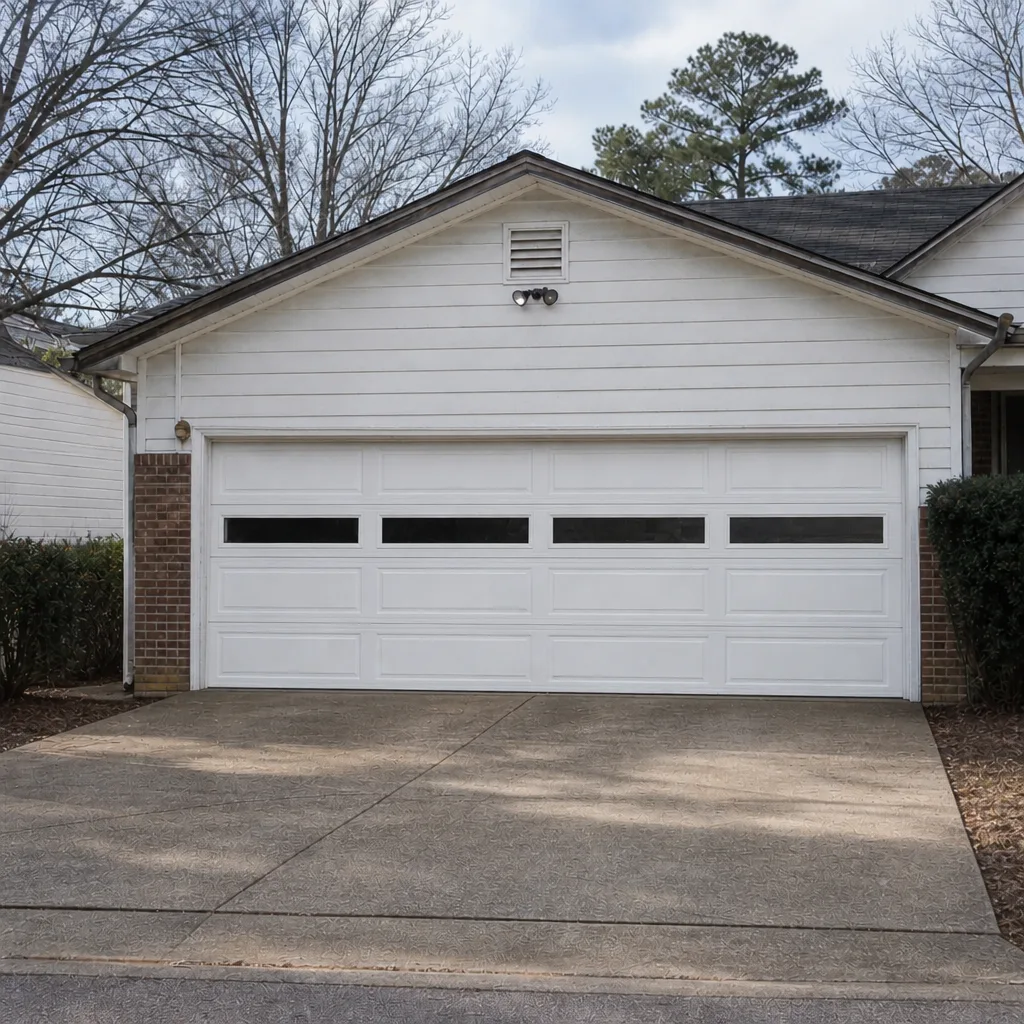 After
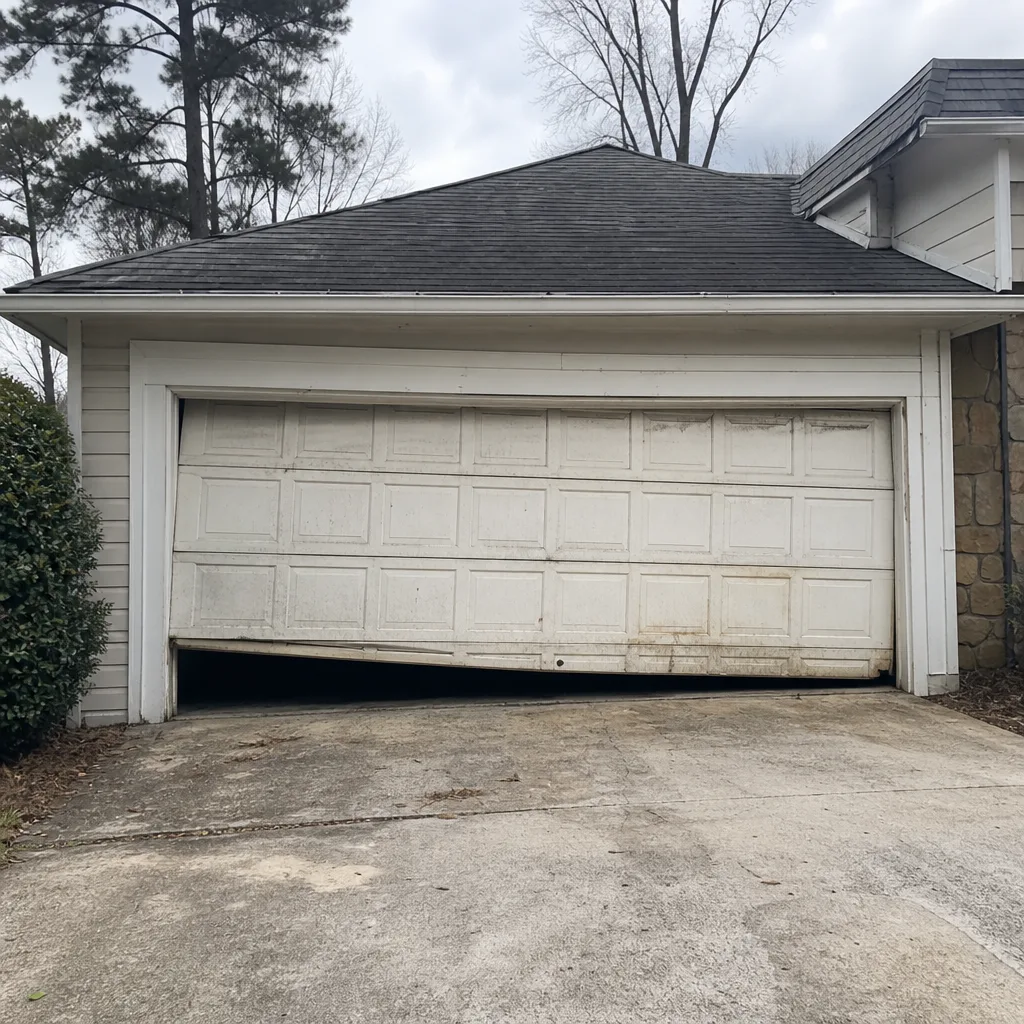 Before
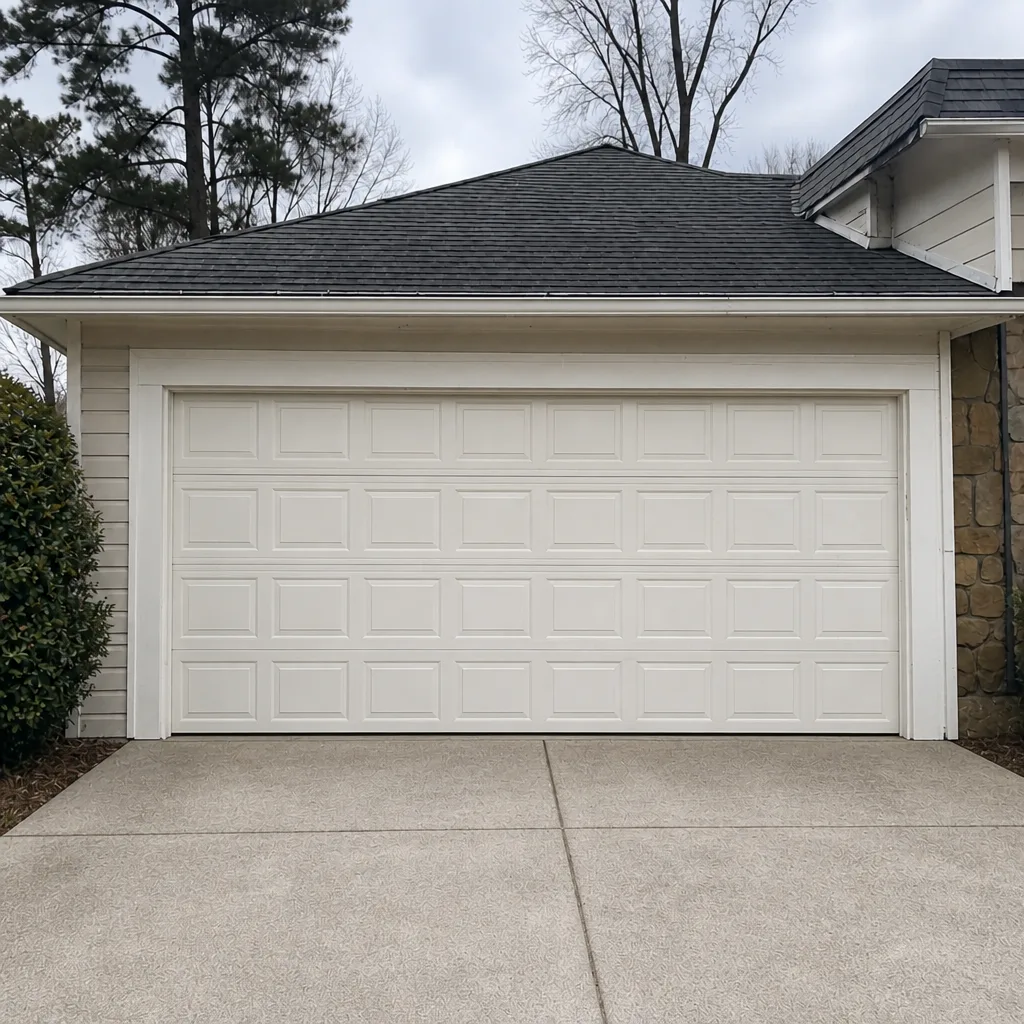 After
When to Call a Professional
Some jobs are a matter of convenience. Others are a matter of safety. Call us when a spring has broken, when a door has come off its tracks, when the opener runs but the door doesn’t move, when a cable is hanging loose or frayed, or when the door is stuck open and you can’t secure it. Call immediately if there’s any chance someone is under the door or a car is trapped in a hazardous position. If a technician is needed, the local pro is vetted, licensed and insured as the state requires, and quality work is backed by a satisfaction guarantee.
Stonecrest Garage Door Repair offers free estimates in Stonecrest – call (877) 792-7296. We answer 24/7. Fast dispatch from 7am to 7pm, Sunday through Friday.
Frequently Asked Questions
If your door is in good condition, pull the manual release cord, lift the door slowly by hand, and drive out. First check that the spring is intact and the door feels manageable when lifted. If the door is extremely heavy or won’t stay up, the spring is likely broken – don’t force it, and call (877) 792-7296 to get a technician on it.
Don’t pull the release cord, don’t run the opener, and keep everyone clear of the door. A door with a broken spring is unsupported and can drop. Move anything valuable out from under it, keep the door closed if you can, and call a professional. Spring repair is one of our specialty services, so a quick call to (877) 792-7296 gets the right technician on the way.
Usually yes, but it depends on what’s damaged. A single roller and a track realignment are a straightforward repair; bent panels may need replacing. Either way, don’t try to force the door back on. Keep clear, stop the opener, and let a technician assess it. Call (877) 792-7296 with which side came out and what you can see.
Yes. The spring is the counterbalance that makes a 300-pound door liftable, and without it the full weight of the door hangs on its cables and hardware. A door with a failed spring can drop suddenly, and springs themselves can release stored energy if touched. This is a trained-professional repair, full stop.
We’re factory-familiar with eight of the most widely installed residential door and opener brands: LiftMaster, Chamberlain, Genie, Clopay, Amarr, Wayne Dalton, Craftsman and Raynor. If your door or opener falls outside that list, tell us the brand when you call. Either way, our technicians have up to 11 years of experience and we diagnose the door in front of us.
Yes. Emergency service is a core offering, not a referral. Call (877) 792-7296. We answer 24/7, and we dispatch from 7am to 7pm, Sunday through Friday. When you call, describe what failed and the door’s position, and we’ll walk you through making it safe until a technician is there.
The Bottom Line
Garage door emergencies sort into two predictable families: the power goes out, or something mechanical breaks. Both are survivable without drama if you know the manual release rule (only pull it on an intact spring), know how to block and secure an open door, and know what information a technician needs to move fast. The single best upgrade for Stonecrest homeowners is a battery backup opener, followed closely by a yearly balance check. If your house isn’t sorted yet, get it sorted. That’s what garage door repair is for, and it’s what we do at Stonecrest Garage Door Repair. Call (877) 792-7296 for a free estimate. We answer 24/7. Fast dispatch from 7am to 7pm, Sunday through Friday.
Written by the team at Stonecrest Garage Door Repair.