
Last updated November 23, 2026
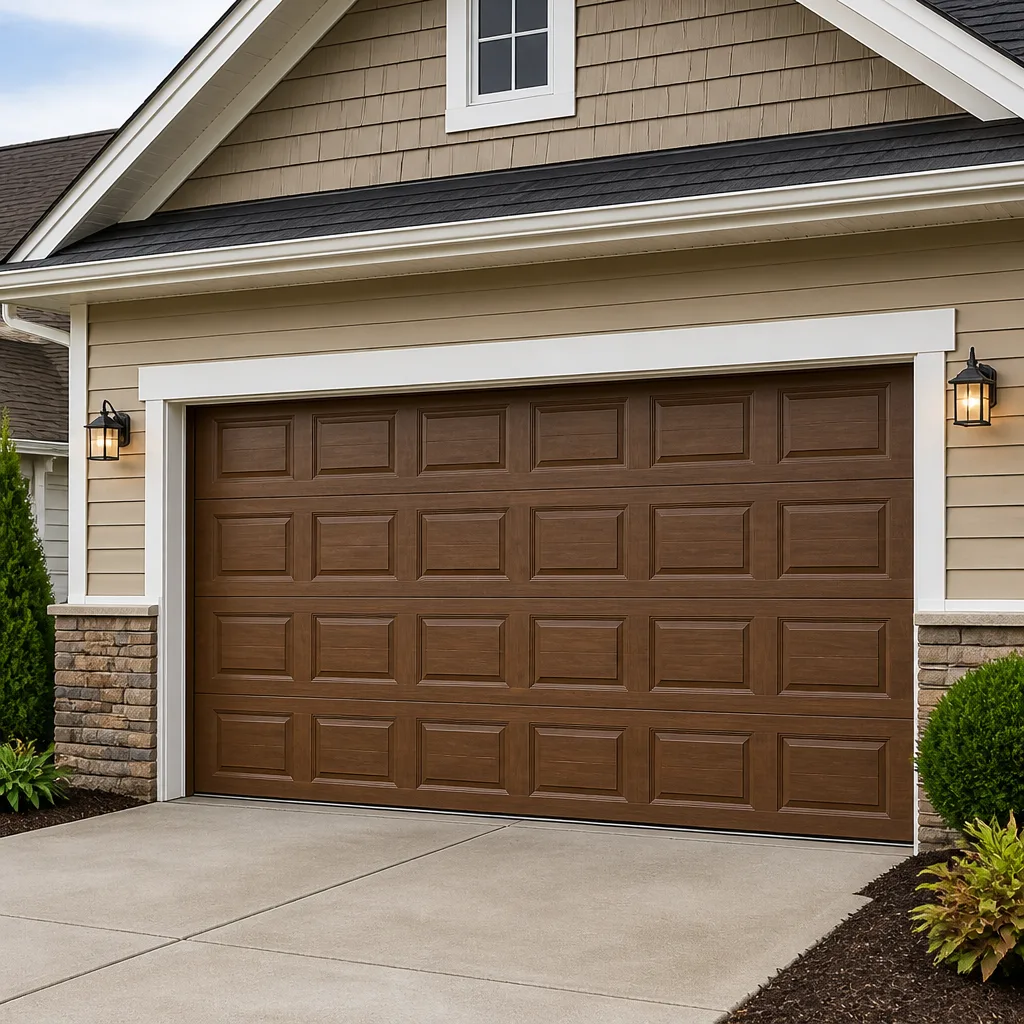 Raised-panel steel
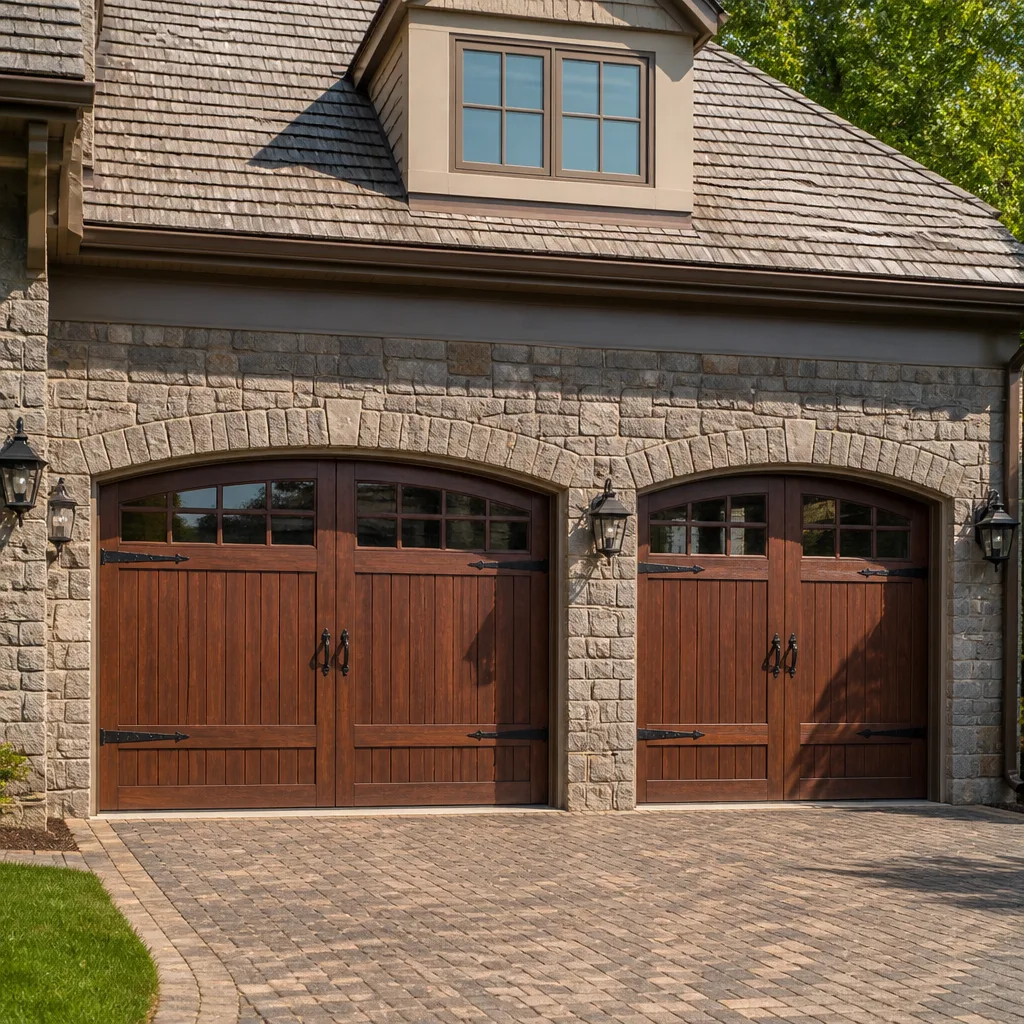 Carriage house
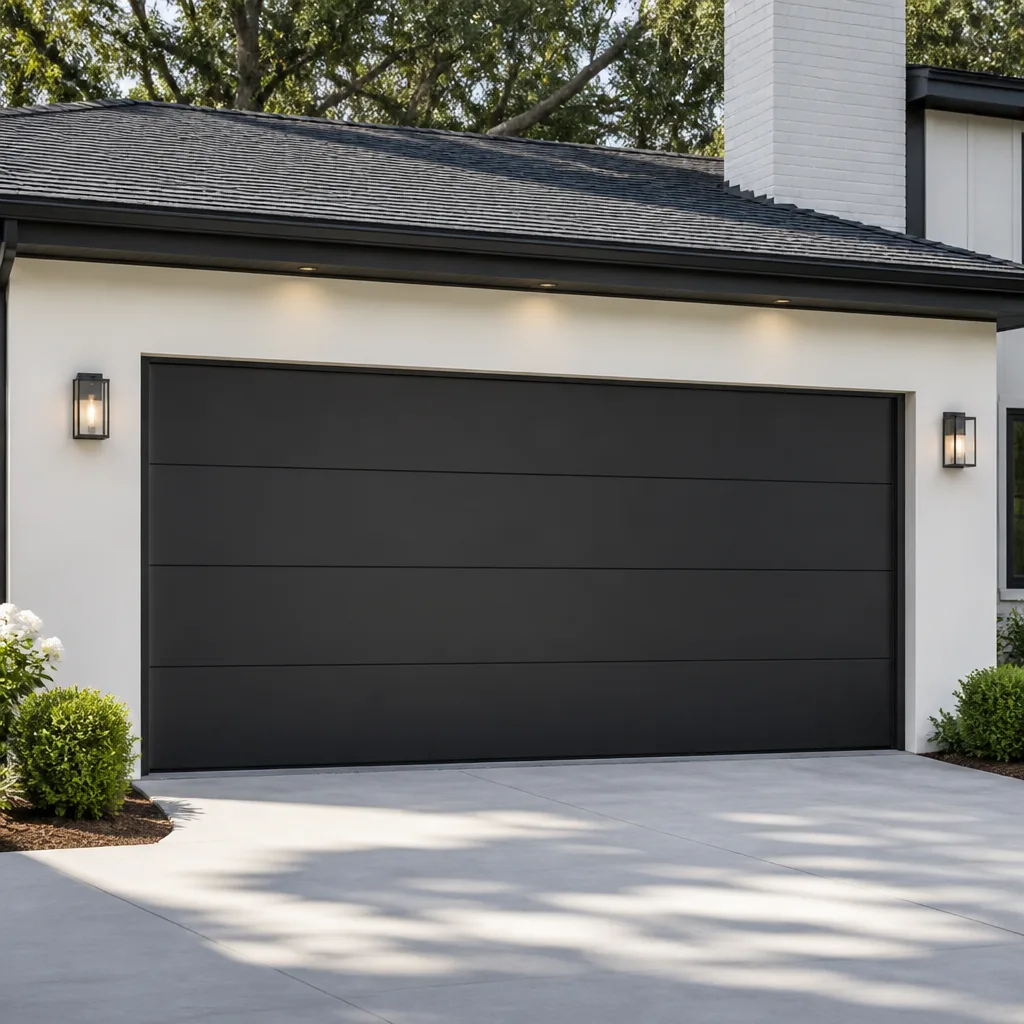 Modern flush
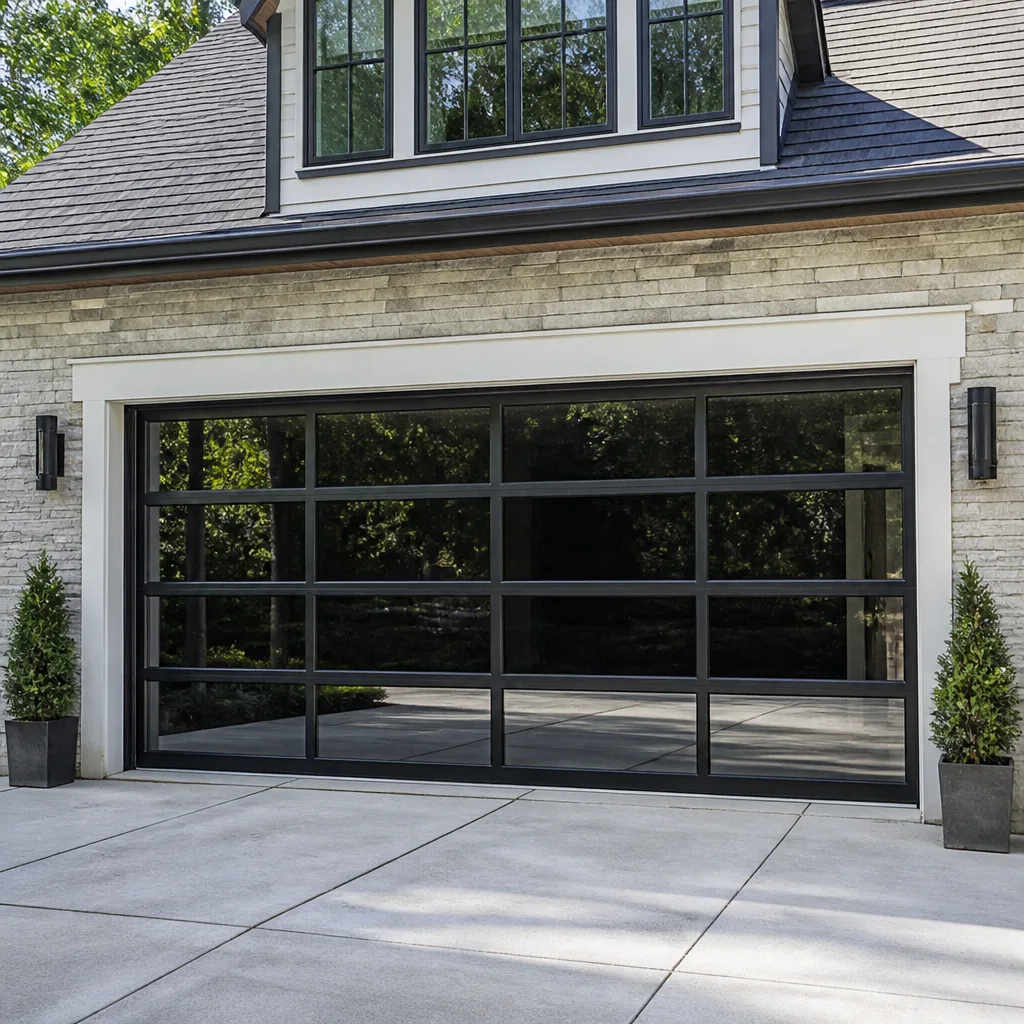 Full-view glass
 LiftMaster openers
 Chamberlain openers
Full 25-point door and opener safety check with every visit - springs, cables, rollers, tracks, and your LiftMaster or Chamberlain opener included
You get a price before we start. It does not change when the pro arrives.
Get your free estimateDIY vs Professional Garage Door: The Stonecrest Homeowner’s Decision Guide
A torsion spring stores roughly the same energy as a loaded crossbow. Except it’s larger, faster, and positioned directly above your head when it fails. That single fact is why the usual “DIY or call a pro?” debate gets the question wrong. The real question isn’t whether you’re handy enough. It’s which specific tasks have an acceptable risk profile for self-service and which ones have injury or liability consequences no amount of confidence can erase. This guide walks through Stonecrest garage door work task by task, from the genuinely safe fixes to the ones where a professional threshold isn’t negotiable.
Quick Answer
Most garage door work splits into two clear groups. Adjustments, lubrication, visual inspections, and remote or sensor troubleshooting are genuinely safe for careful homeowners to handle. Spring replacement, cable work, and any repair requiring you to release tension stored in the system are professional-only territory, not because they’re complicated but because the stored force can kill regardless of experience. Everything else falls between those poles, and we’ve built this guide to help you place your specific situation on that map.
Styles & brands we work with
- Raised-panel steel
- Carriage house
- Modern flush
- Full-view glass
- LiftMaster openers
- Chamberlain openers
Table of Contents
- Why the DIY vs Professional Framing Is Usually Wrong
- The Task-by-Task Risk Matrix
- The Tools Spring Work Requires (and Why You Can’t Improvise Them)
- How DIY Mistakes Show Up to a Technician
- Warranty and Insurance Implications in Georgia
- The Middle Path: Prep Work That Reduces Cost
- Brand-Specific Realities: Clopay, Amarr, Wayne Dalton and Craftsman
- The Real Cost Comparison
Why the DIY vs Professional Framing Is Usually Wrong
The internet is full of garage door advice framed as a binary: either you fix it yourself or you pay someone. That framing assumes every task carries roughly the same risk. They don’t. Changing a garage door remote’s battery and replacing a torsion spring are about as far apart on the danger spectrum as swapping a light bulb and rewiring an electrical panel.
In Stonecrest, where most homes were built within the last couple of decades and many still have original springs approaching the end of their service life, the stakes of that miscalibration are real. A homeowner who successfully changed a drive belt two years ago might reasonably assume a spring swap is the next step up. It isn’t. It’s a different category of risk entirely.
At Stonecrest Garage Door Repair, we’ve seen what happens when that category confusion catches up with people. Not the horror stories you see in viral videos, but the quieter version: a homeowner who got halfway through a spring job, felt the tension release unexpectedly, and stopped before something worse happened. Or someone who tried to adjust a cable and ended up with a door hanging crooked and a bent track to sort out on top of the original problem.
The way we approach garage door repair is shaped by that experience. Our position isn’t that homeowners shouldn’t touch their doors. It’s that the door has two distinct zones, and only one of them is safe for self-service. This guide draws the line where we believe it actually belongs.
The Task-by-Task Risk Matrix
Here’s how we break down common garage door tasks by DIY safety. This is the same mental map our technicians carry when they evaluate what a homeowner has already attempted before a service visit.
Genuinely Safe for a Competent DIYer
- Lubrication. Spring coils, hinges, rollers, and tracks benefit from periodic lubrication. Follow the manual for the right product and you can’t really break anything.
- Safety-eye alignment. The two photo-eye sensors near the floor are easy to knock out of alignment. Realigning them so they point at each other is a screwdriver job.
- Remote and keypad programming. Pairing a new remote or updating a keypad code is straightforward with the opener’s manual in hand.
- Weatherstripping replacement. The rubber seal along the bottom of the door is a simple swap on most residential models.
- Battery replacement. Remote batteries, keypad batteries, and backup batteries in openers with battery-backup features.
- Visual inspections. Looking for frayed cables, worn rollers, cracked hinges, or uneven wear on the door panels. No tools required, no risk involved.
- Basic cleaning. Wiping down panels and clearing debris from the track.
Middle Ground: Doable but Easy to Get Wrong
- Opener force and travel adjustments. Doable on most openers, but the settings affect safety reverse behavior. Get them wrong and the door can close on an obstruction or refuse to close at all.
- Track cleaning and minor alignment. Small tweaks to a slightly bent track can work, but bending it back the wrong direction usually makes it worse.
- Roller replacement. Straightforward when the door is fully up and tension is off, but easy to do badly.
- Hinge replacement. Same caveat: safe with the door up, risky with the door down.
Professional-Only, No Exceptions
- Torsion spring replacement or adjustment. Non-negotiable. The stored energy is lethal if it releases at the wrong moment.
- Extension spring replacement. Same category. Extension springs store less energy than torsion, but still enough to cause serious injury.
- Cable replacement or adjustment. Cables hold the door’s weight under tension. The wrong move sends them whipping.
- Bottom bracket work. The bottom brackets anchor the cables. They’re the single most dangerous component on the entire door.
- Panel replacement. A garage door weighs hundreds of pounds. Removing or replacing a section without proper support can drop the door.
- Opener replacement. Electrical work plus the counterbalance issue above, all at once.
- Any repair on a door that has lost tension. Once the system has released tension, everything is unpredictable until a trained technician secures it.
The Tools Spring Work Requires (and Why You Can’t Improvise Them)
Ask a homeowner to list what they have in the garage and you’ll usually hear screwdrivers, a socket set, maybe a ladder. None of that touches a torsion spring safely. Spring work requires specific tooling most people don’t own and can’t safely substitute with whatever’s around the shop.
The core requirements for torsion spring work include:
- Winding bars sized to the spring. These are hardened steel rods designed to slot into the winding cone and hold the spring under tension while you turn. The wrong size means a bar that bends or slips at the worst moment. Substitutes like screwdrivers are a common and dangerous improvisation.
- A proper set of winding cones and drums. If the existing hardware is worn, it needs to be replaced in the same job. A spring swap on failed cones is a job that comes back in a week.
- C-clamps rated for the door’s weight. Vise grips are not the same thing. Clamps hold the door in the up position while work happens.
- Lifting support or a second person. Spring work on an unsecured door puts the entire weight of the panels on the cables and tracks if something goes wrong.
- Proper safety gear. Eye protection and gloves are baseline. Even with all of the above correct, technicians wear gloves rated for impact and cut resistance.
- Knowledge of how to release tension safely. This is the part you can’t order online. If you don’t know how much tension remains in the system, you don’t know what you’re working on.
We’ve trained our technicians to work with these tools daily, and we’re methodical about it every time. If you don’t own the proper winding bars and you’re considering a spring replacement, that’s your answer: stop. When you call garage door spring repair, one of our technicians will show up with everything needed for the specific spring on your door. Broken spring? That’s our specialty, and it’s the repair category we treat with the most care.
How DIY Mistakes Show Up to a Technician
A technician can almost always spot a partially attempted DIY repair before they even start working. The patterns are consistent, and they tend to add cost to what would have been a straightforward job.
The Half-Wound Spring
When someone tries to replace a spring and stops partway through, the new spring is often left un-tensioned or incorrectly wound. We see this as a spring that looks new but doesn’t lift the door, or worse, is bound by a cable that’s been overtightened to compensate. Repairing this means resetting the entire counterbalance system, which is more time-consuming than the original spring swap would have been.
The Bent Track
A door that comes down unevenly or gets stuck mid-travel while the homeowner tries to force it back into the track bends the track quickly. A bent section of track is usually replaceable in sections, but if the homeowner tries to straighten it themselves with a hammer or a pry bar, the distortion tends to spread. We’ve seen this turn a five-minute track adjustment into a full track replacement.
The Disconnected Cable
Cables lose their seating when someone removes them without understanding the tension path. Restringing a cable on a torsion system requires re-tensioning the spring afterward to match. Homeowners who try to fix a loose cable directly usually make it worse. The common outcome is a door that won’t open evenly, with the cable jumping the drum.
The Overwound Opener Force Adjustment
When the safety reverse keeps engaging because the door is slightly stiff, a common DIY fix is to crank up the force setting. That works until the door closes and traps something or someone under the pressure. Technicians resetting this need to trace back to why the reverse was engaging in the first place, not just turn the setting down again.
In our experience, the cost of correcting a partial DIY job on a spring or cable usually runs higher than the original professional repair would have cost. That’s not a scare tactic. It’s arithmetic: the technician has to undo the mistake before they can fix the original problem.
Warranty and Insurance Implications in Georgia
Most garage door manufacturers extend limited warranties on panels, springs, and hardware, and many of those warranties assume the door was installed and serviced by qualified professionals. On doors under an active manufacturer warranty, DIY work on structural or tension-bearing components can void coverage for those components. If you have a Clopay or Amarr door installed in the last several years, check the warranty card before starting anything beyond lubrication.
The insurance picture is worth understanding too. Homeowner policies usually respond to accidental damage, but they often exclude damage from improper repairs or work done outside code. In Georgia, garage door work generally falls under local permit and inspection rules for structural modifications, and the exact requirements vary by jurisdiction. The practical move is to call the City of Stonecrest building department and ask what applies to your specific situation before you start. That call has saved a lot of homeowners from a headache later.
There’s nothing alarmist to add to that. The point is straightforward: on a warranty-backed door, working on springs or cables yourself trades a chance at free replacement coverage for a chance to save a service fee. On any door, working on structural components without a permit in a jurisdiction that requires one can complicate a later claim. Neither trade usually pays out well.
Under warranty or not, when a spring or cable goes, the ceiling-stored energy doesn’t care. That’s a factor independent of any policy. Our garage door repair service includes full-system diagnostic work, so a technician can look at the door’s current state, identify what’s under warranty, and tell you exactly what to expect before work starts.
The Middle Path: Prep Work That Reduces Cost
The third option between full DIY and full professional repair is the one most homeowners miss. There’s genuine cost savings available from preparing the work area and handling the non-dangerous parts, and it doesn’t compromise any of the safety lines above.
Pre-Work You Can Safely Handle
- Clear the garage floor around the door. Technicians need three or four feet of clearance around the base of the door and along the tracks. If you’re calling after a break, this is the first thing to do while you wait.
- Photograph what’s broken. A clear photo of the snapped spring, the bent track section, or the dangling cable lets the technician come prepared with the right parts on the first visit. This is the single biggest time-saver we see.
- Document the door model and opener model. The sticker on the interior door frame or the opener chassis tells you the make and model. A Clopay door with a Craftsman opener is a different job than other combinations, and knowing that before the visit cuts diagnostic time.
- Note what you’ve already tried. If you adjusted anything, wrote down what and how far. A technician who knows what’s been altered can fix the altered part faster.
- Make sure the door is locked up if you’re leaving it overnight. A door with a broken spring can often be disengaged from the opener and left down. Lock it manually to keep the garage secure. Our garage door opener repair service can address both the opener and any door-securing matters in one visit.
- Have a rough budget in mind. A free estimate is just that. Knowing you’d like to compare options for repair versus replacement before anyone arrives helps you make a real decision rather than feeling rushed.
None of this replaces professional work on the dangerous components. What it does is reduce the labor time a technician needs to spend getting oriented, which usually means a smaller bill. On a door that’s still under warranty, we also appreciate the model info ahead of time. We work on everything from LiftMaster and Chamberlain myQ smart openers to legacy Craftsman chain-drive units, and our technicians know the quirks of each system.
Brand-Specific Realities: Clopay, Amarr, Wayne Dalton and Craftsman
Garage door brands differ more than most homeowners expect. A spring replacement on a Wayne Dalton door isn’t the same procedure as a spring replacement on a Clopay model, and the wrong part is a real risk when a generic kit gets involved.
Clopay doors often use a spring configuration that’s sized precisely to the door’s weight. Aftermarket springs that don’t match the door’s counterbalance spec cause premature wear on the rollers and tracks. A technician working with the correct Clopay specification does the job once. A spring from a box store might fit but not balance the door correctly, and that imbalance shows up within weeks.
Amarr and Wayne Dalton openers on older models use specific mounting hardware. Craftsman openers, especially legacy chain-drive units, are a robust platform but one with a lot of variance in how the safety reverse mechanism is wired. Smart-home integration on more modern Clopay and Amarr setups with LiftMaster or Chamberlain myQ openers introduces another compatibility layer, especially when a homeowner wants to add Wi-Fi control after a repair.
We’re factory-familiar with eight major brands across the residential market. That list is precise and intentional: LiftMaster, Chamberlain, Genie, Clopay, Amarr, Wayne Dalton, Craftsman, and Raynor. If your door or opener is one of those, our technicians know the failure modes that matter and carry the diagnostics for them. We don’t claim support for brands outside that list. If you’re not sure what you have, the model number usually starts with a few letters that will tell you. We can confirm before the visit when you call.
The Real Cost Comparison
Cost is the reason most people ask the DIY question in the first place, so it deserves a straight answer. Here’s how the typical cost picture breaks down for the two categories that matter most: springs and general repair.
| Job | DIY Path | Professional Path |
|---|---|---|
| Lubrication, weatherstripping, sensor alignment | Under $30 in materials, no real risk | Rarely needed. Free estimate if you want it checked. |
| Opener adjustment or remote programming | Free with the manual, low risk | Included in most service visits |
| Roller or hinge replacement | Parts only, moderate risk if done wrong | Quick job, quoted upfront |
| Single torsion spring replacement | Part cost only, but risk is injury or worse | One spring typically runs $180 – $340. Matched pair usually replaced together, about double that. |
| Cable replacement | Part cost only, but risk is injury | Quoted per job, part of the same visit as the spring when they fail together |
| Bent track repair | Part cost only, likely to make it worse | Quoted per job after inspection |
| Full door replacement | Not viable for most homeowners | Quoted per job, free written estimate |
The spring line is the one that matters most. The price of a spring shown above is for one spring, and since matched pairs usually need to be replaced together, expect roughly double that for a pair. Whatever the final number is, we quote it and agree on it before any work starts. The written estimate sets the final price. If a technician finds something different once the door is open, you’ll hear about it before a tool comes off the truck, not on the invoice.
The DIY savings on a spring are almost entirely theoretical. A homeowner who successfully replaces a spring has avoided the labor cost. A homeowner who gets hurt, or who ends up paying a pro to fix a partial job, has paid more than the pro would have charged to begin with. For a task where the failure mode is physical rather than financial, the upside has to be weighed against that reality.
Common Mistakes to Avoid
- Treating a torsion spring swap as a “bigger version” of an opener repair. They’re different categories. Springs are stored energy that can release instantly. Openers are controlled mechanical systems.
- Substituting screwdrivers for winding bars. This is the classic one. Screwdrivers are not rated for the torque, they bend, and a bending screwdriver releasing a spring mid-wind is the exact scenario that causes injury.
- Overtightening the opener force when the door gets stiff. The force setting is a safety limit, not a remedy for friction. If the door feels stiff, the door has a friction problem the force setting won’t fix.
- Trying to straighten a bent track with hand tools. Track steel is thin and marks easily. A hammer and pry bar usually turn a small bent section into a full track replacement.
- Removing a bottom bracket without understanding the cable tension. The bottom bracket is under the full cable tension. Removing it without loosening the cables correctly can cause severe injury.
- Assuming the manufacturer’s warranty covers DIY work. On a Clopay or Amarr door within warranty, spring or cable work done by the homeowner generally voids coverage on those components. Read the card first.
- Not calling the city for permit requirements. Stonecrest building department requirements for structural door work vary by situation. A quick call before starting saves a lot of backtracking.
See the difference
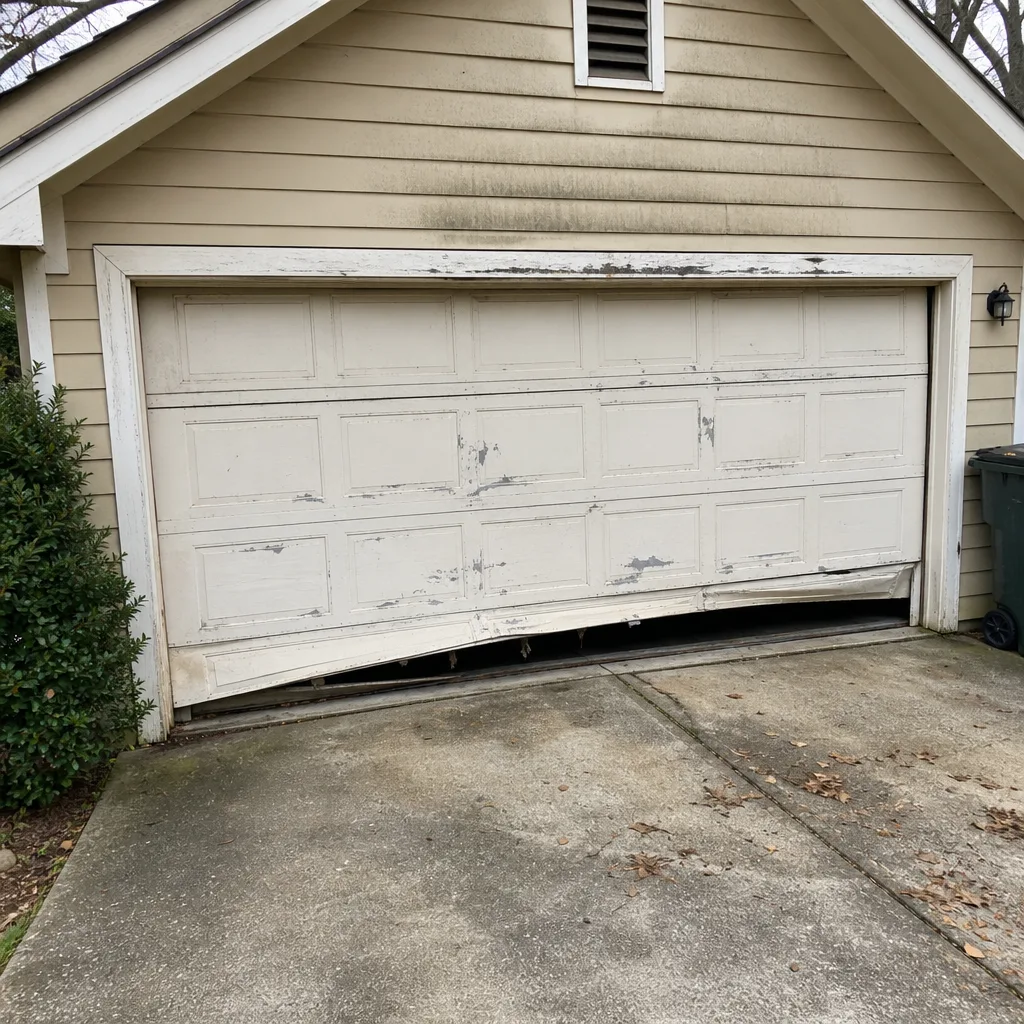 Before
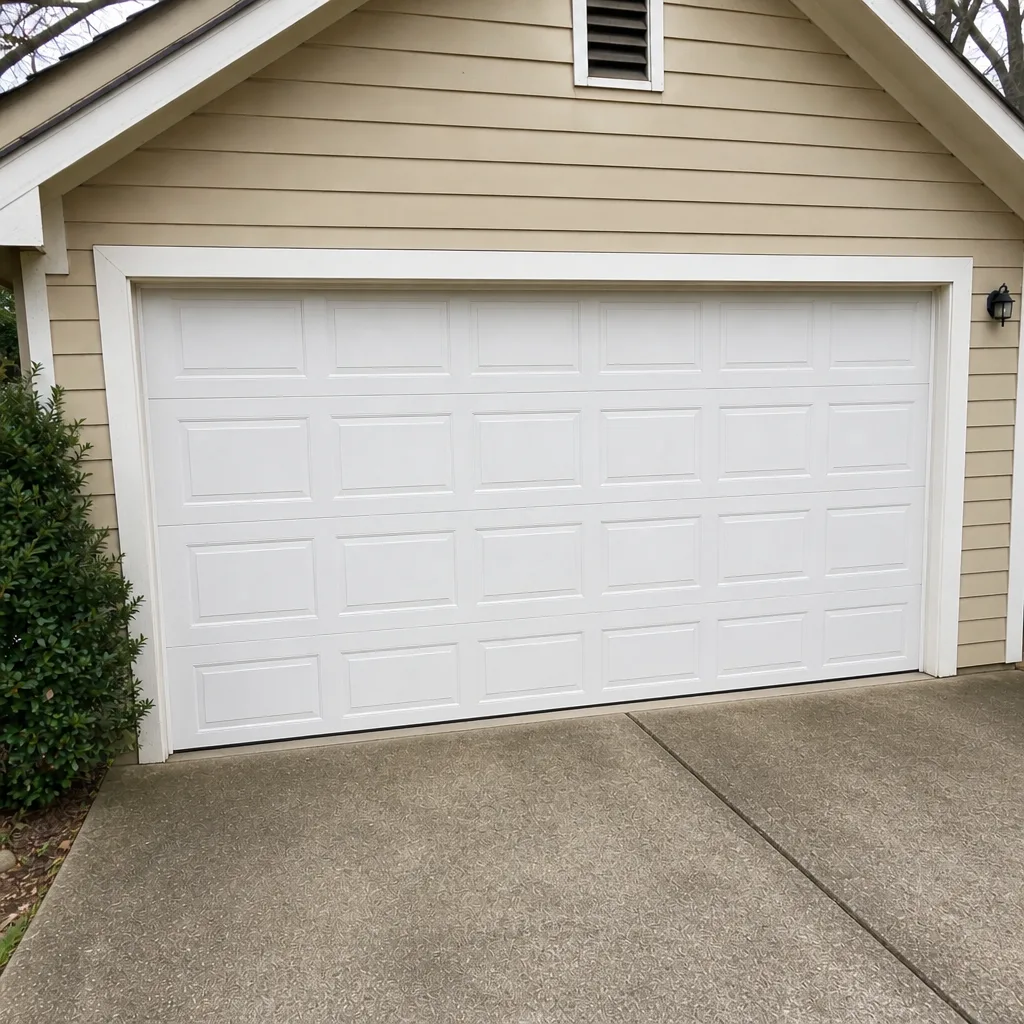 After
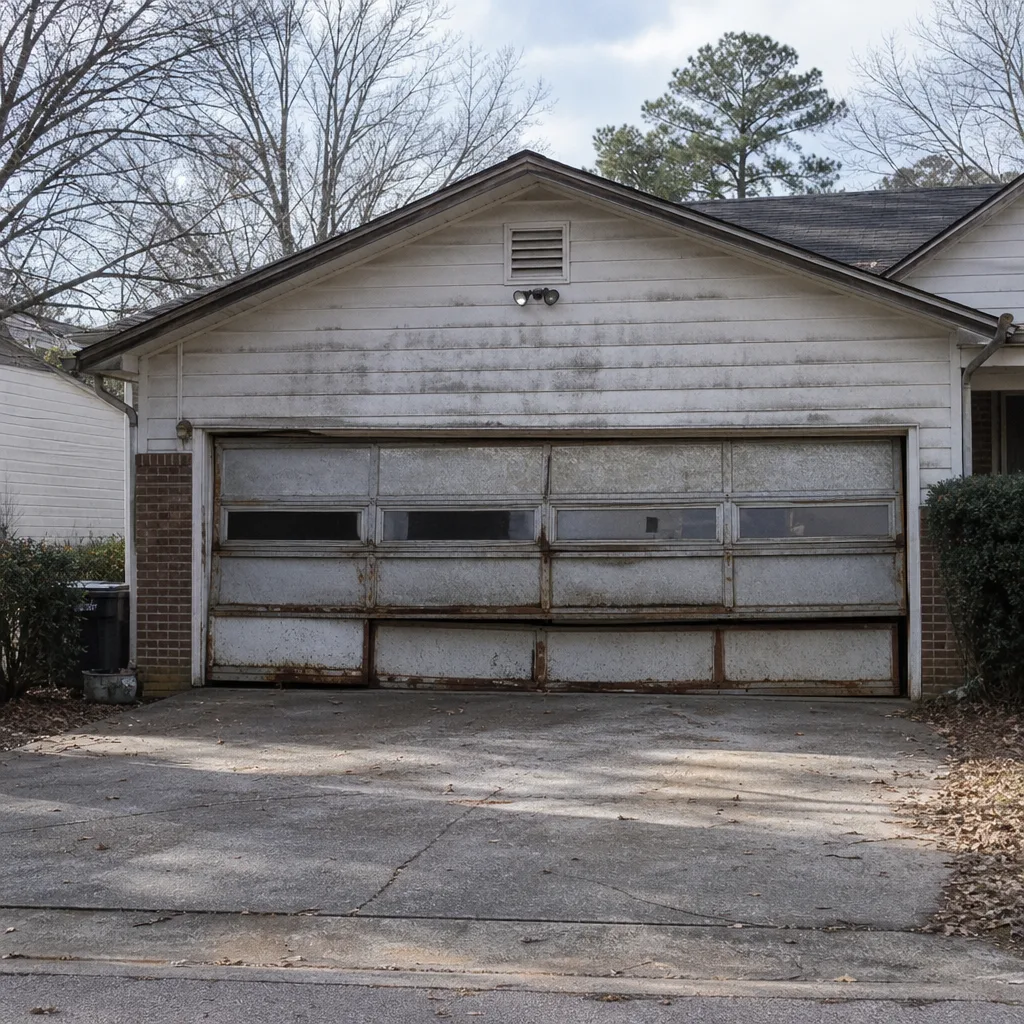 Before
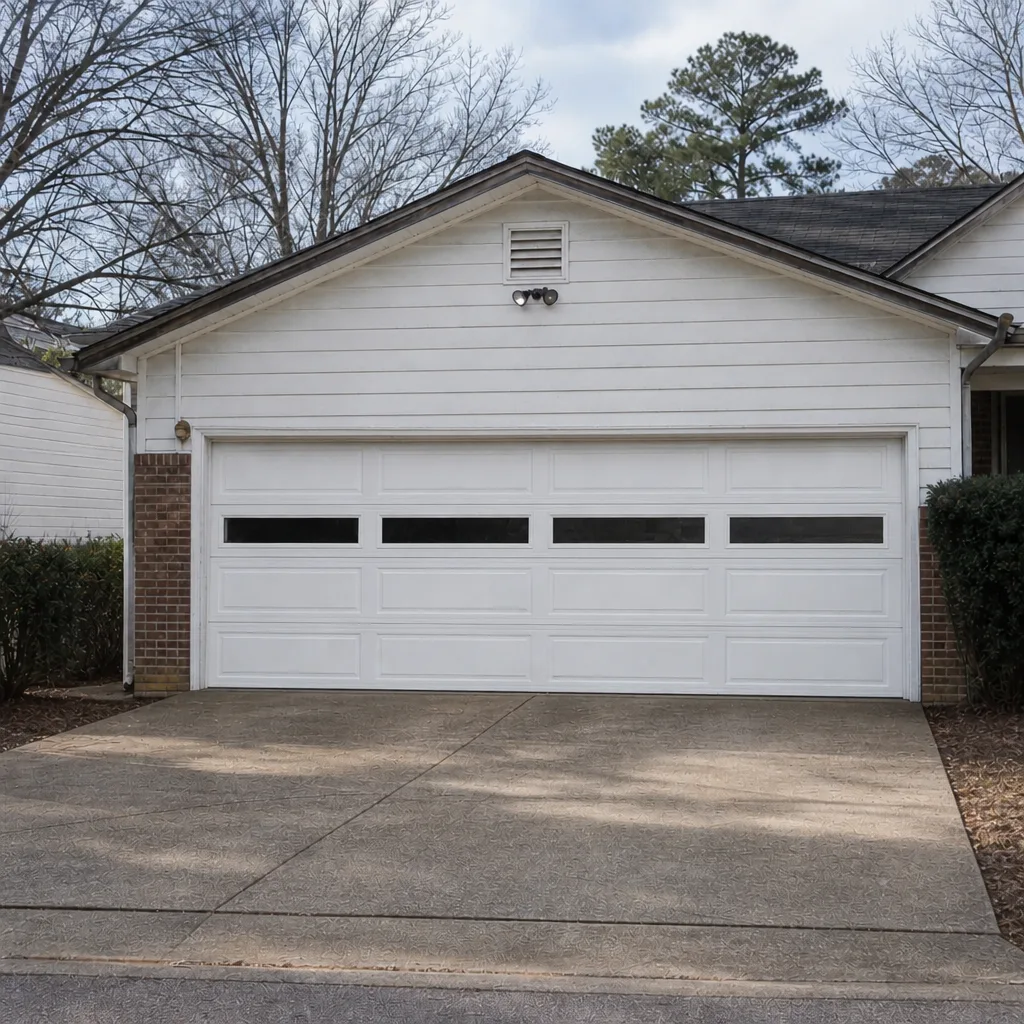 After
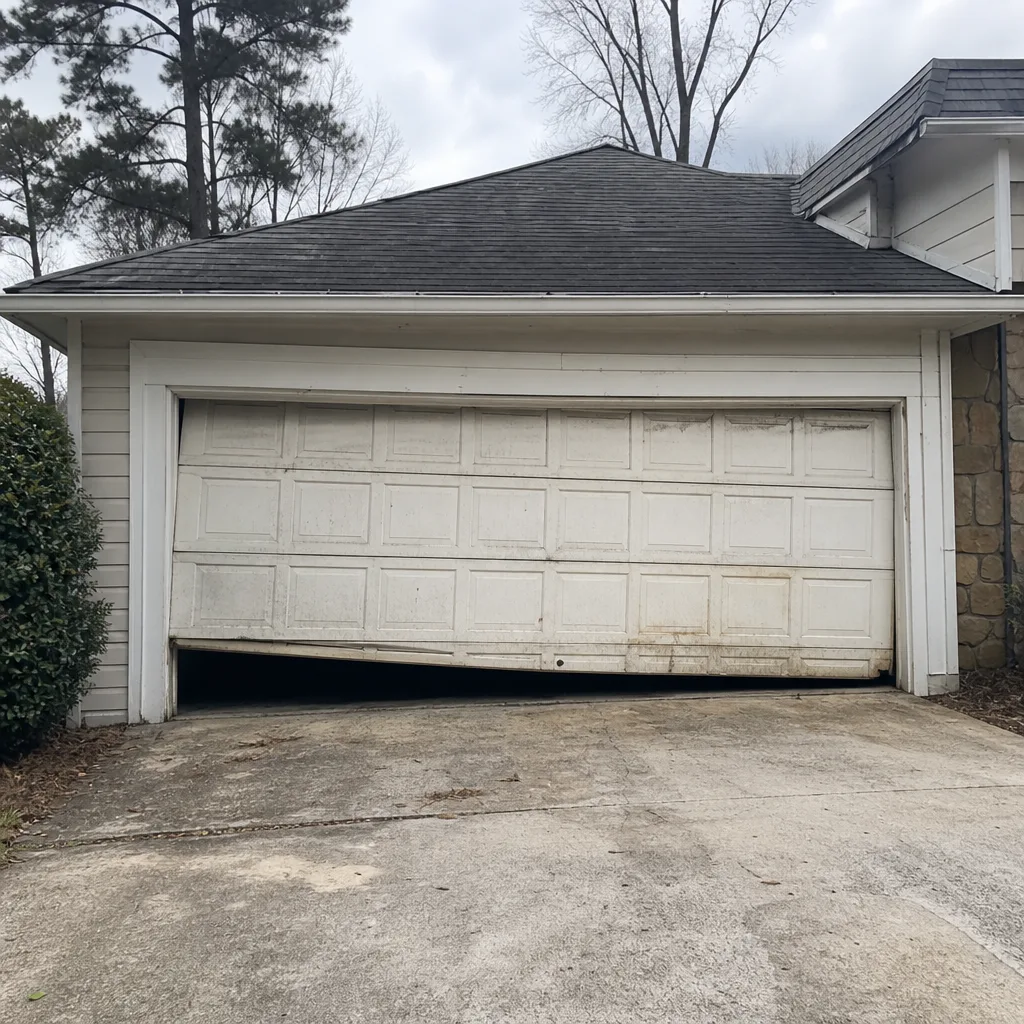 Before
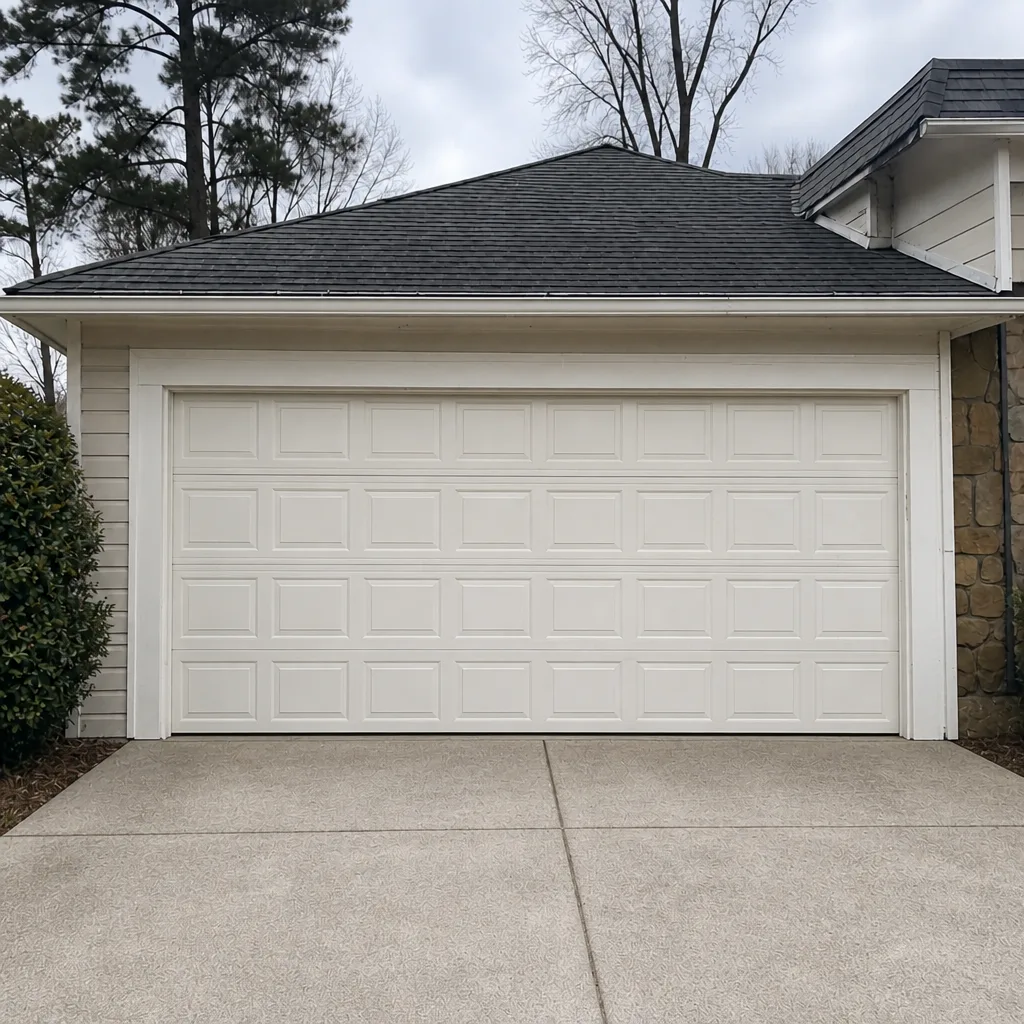 After
When to Call a Professional
Call a professional when the repair involves any component that holds the door’s weight: springs, cables, bottom brackets, drums, or a panel replacement. Call when the door has lost tension and is sitting wrong. Call when the door won’t close fully and the safety reverse is fighting the door. Call when you’ve started a repair and realized you don’t have the right tools, because a half-finished job on a spring is far more dangerous than a broken one. Call when the car is trapped or the door isn’t secure and you can’t safely disengage the opener yourself. Call when you want a real price comparison between repair and replacement, and you’d rather have it from someone who works on your door’s actual brand every day.
Stonecrest Garage Door Repair offers free estimates in Stonecrest. Call (877) 792-7296. We answer 24/7, with fast dispatch from 7am to 7pm, Sunday through Friday. Our technicians have up to 11 years of experience, and they show up ready for whatever brand and model of door is in front of them.
Frequently Asked Questions
No, replacing a garage door spring yourself is not safe, regardless of your experience level. The spring stores enough energy to cause serious injury or death if it releases at the wrong moment. The specialized winding bars, proper clamps, and knowledge of how to release tension safely are all requirements most homeowners don’t have. Call (877) 792-7296 to book a spring replacement. Estimates are free.
Over-adjusting the opener’s force setting is the most common DIY mistake that’s easy to fix yourself. If the door reversed unexpectedly, you probably raised the force. Put the manual’s default setting back before calling anyone. If it still reverses, the door has a friction or balance problem that a pro should see. Call (877) 792-7296 for a free estimate if that doesn’t resolve it.
DIY work on springs, cables, or structural components generally voids the manufacturer’s warranty on those components. Many panel and hardware warranties assume professional installation and service. Check the warranty card for your specific door: the terms usually spell out exactly which components are covered and what voids the coverage. Call our team if you want a technician to look at a warranty situation before touching the door. Estimates are free.
Yes, we work on Clopay, Amarr, Wayne Dalton, Craftsman, and four other major brands: LiftMaster, Chamberlain, Genie, and Raynor. Our technicians are factory-familiar with the specific quirks of each system, so they know what a normal wear pattern looks like and what a problem looks like. Call (877) 792-7296 with the model number from the inside of your door frame or your opener for a diagnosis.
A door with a broken spring can often be opened manually with care, but the door’s weight is now unsupported by the counterbalance, which is a serious risk if it drops. Disengage the opener and leave the door down if you can, and get it serviced quickly rather than forcing it repeatedly. Call (877) 792-7296 to book a repair. We answer 24/7, and a call outside dispatch hours is booked into the next opening, Sunday through Friday, 7am to 7pm.
No. The written estimate we give you before starting work is the price you pay. The price is quoted and agreed before any work begins, so a discovered problem gets discussed with you before a technician proceeds with anything outside the agreed scope. Call (877) 792-7296 for an exact quote. Estimates are free.
The Bottom Line
Garage door work isn’t a skill-based question of whether you’re handy enough. It’s a task-by-task risk assessment. Lubrication, sensor alignment, weatherstripping, and remote programming are yours to handle safely. Springs, cables, bottom brackets, and anything that holds the door’s weight are professional-only, not because they’re hard but because the physics doesn’t forgive mistakes. The prep work you do before a technician arrives, from clearing the floor to photographing the failure and noting the model number, genuinely reduces the cost of the visit. When in doubt, get a quote before you get in over your head. We handle every step of the process, from a snapped spring to a full new door installation, so you’re never calling a second company as your situation changes. From the first cable to the final panel, that’s what we’re set up to handle.
Our technicians have up to 11 years of experience, are equipped for work across all eight supported brands, and are ready to handle whatever your door needs. Call (877) 792-7296 for a free estimate. We answer 24/7. Fast dispatch from 7am to 7pm, Sunday through Friday.
Written by the team at Stonecrest Garage Door Repair.