
Last updated November 23, 2026
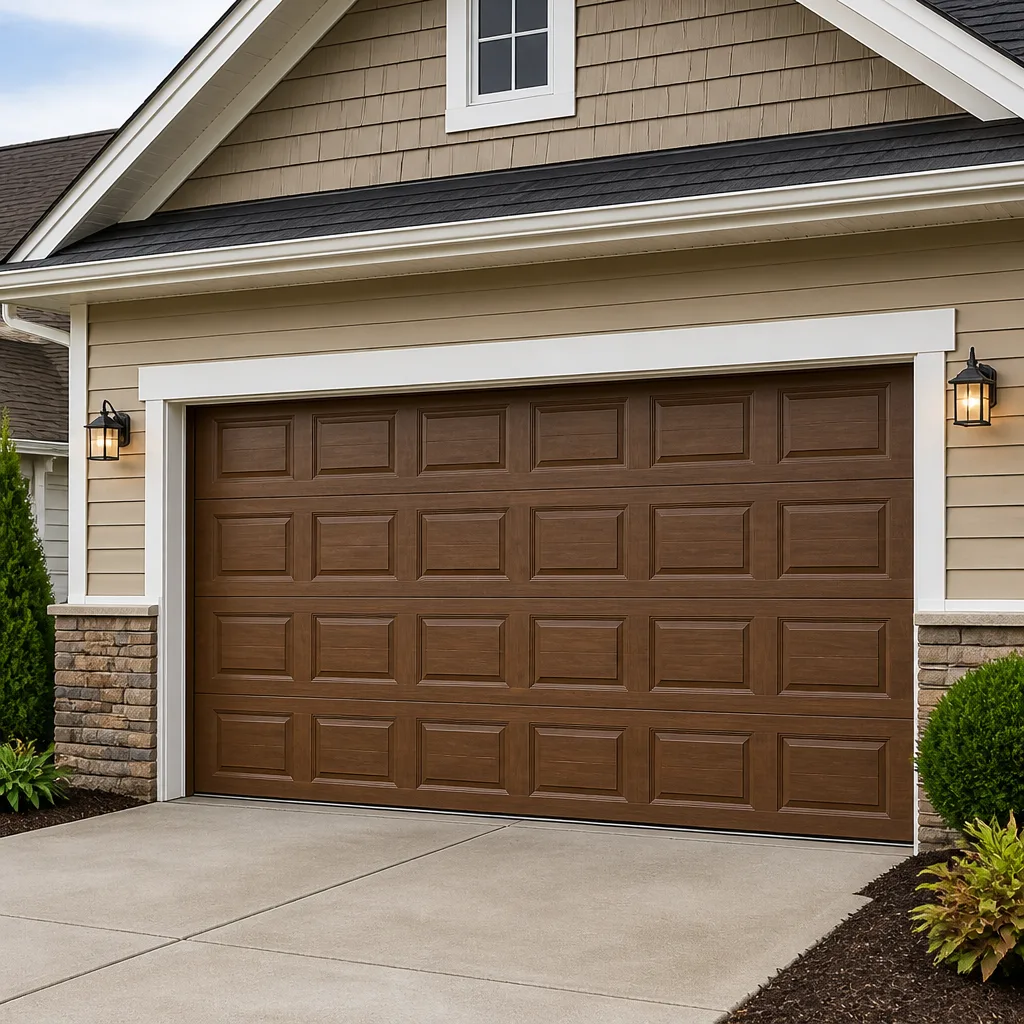 Raised-panel steel
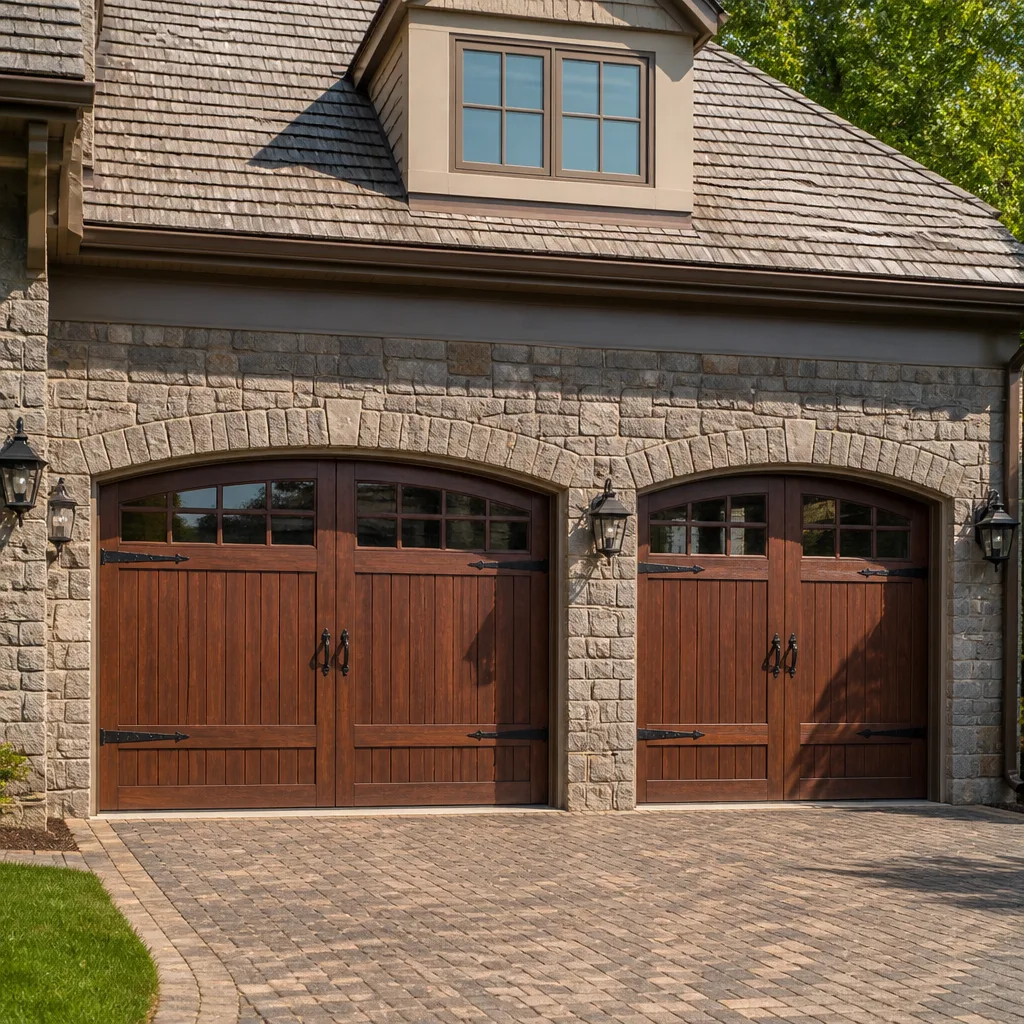 Carriage house
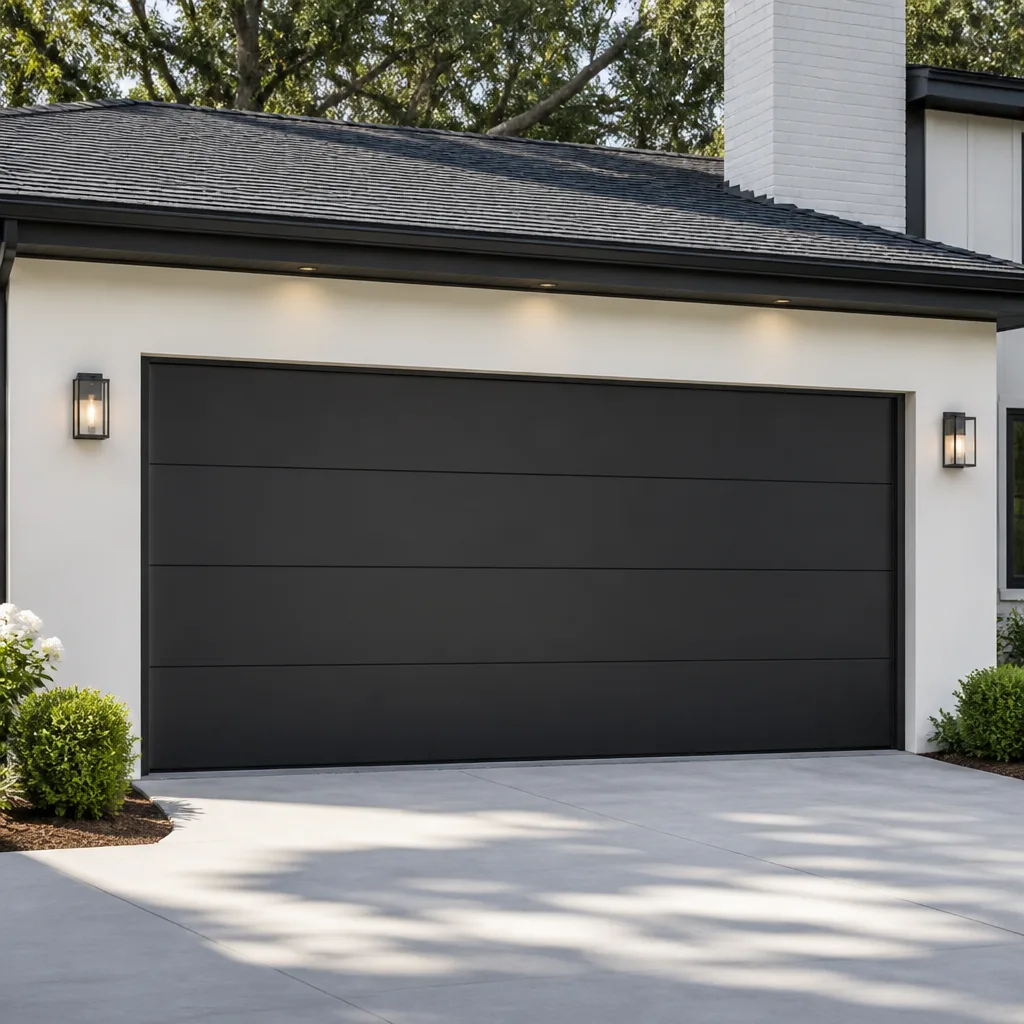 Modern flush
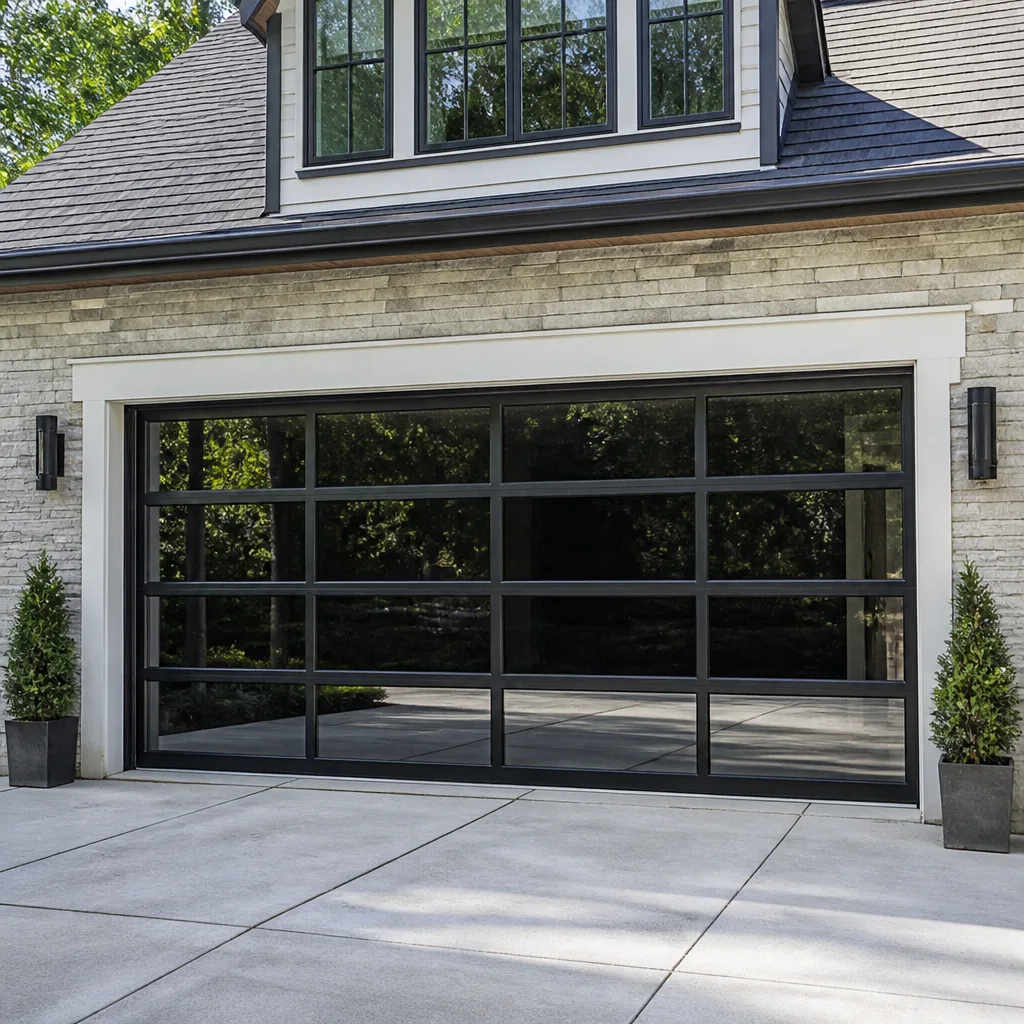 Full-view glass
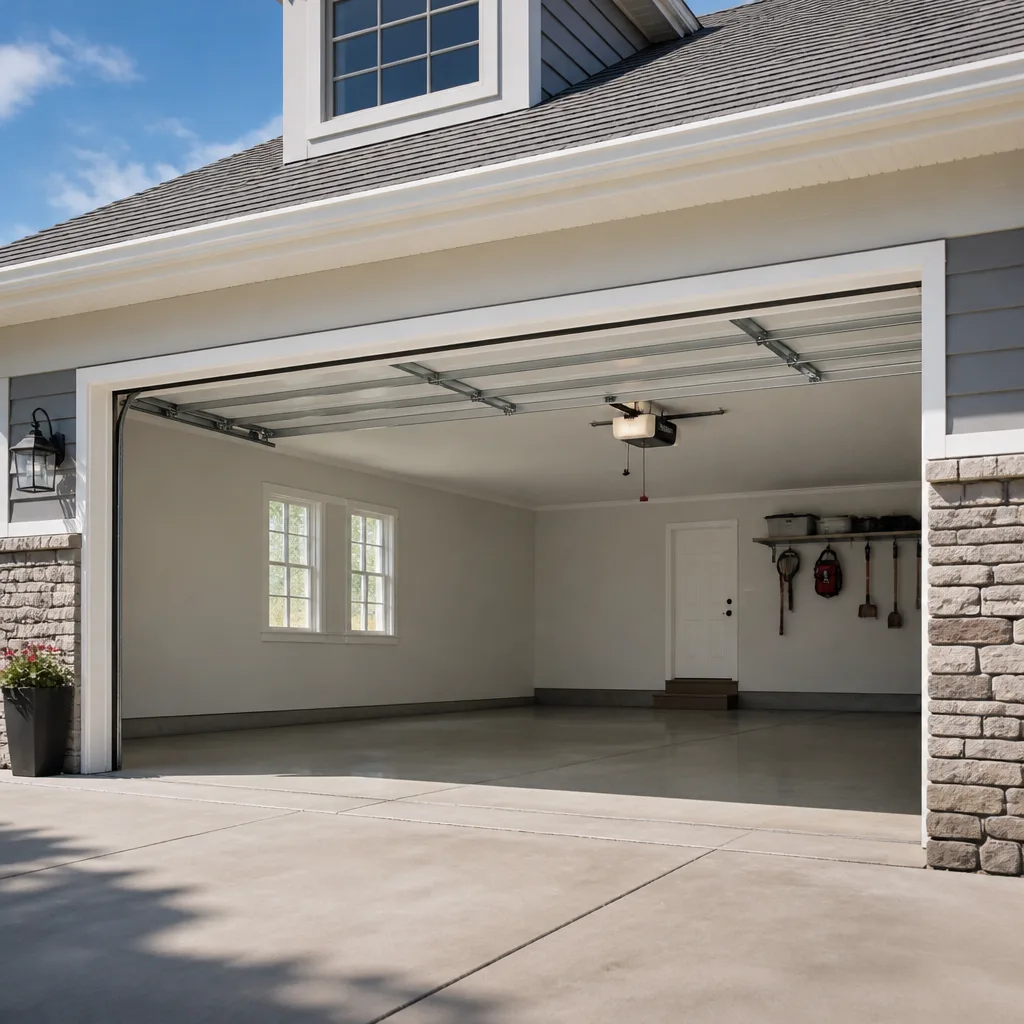 LiftMaster openers
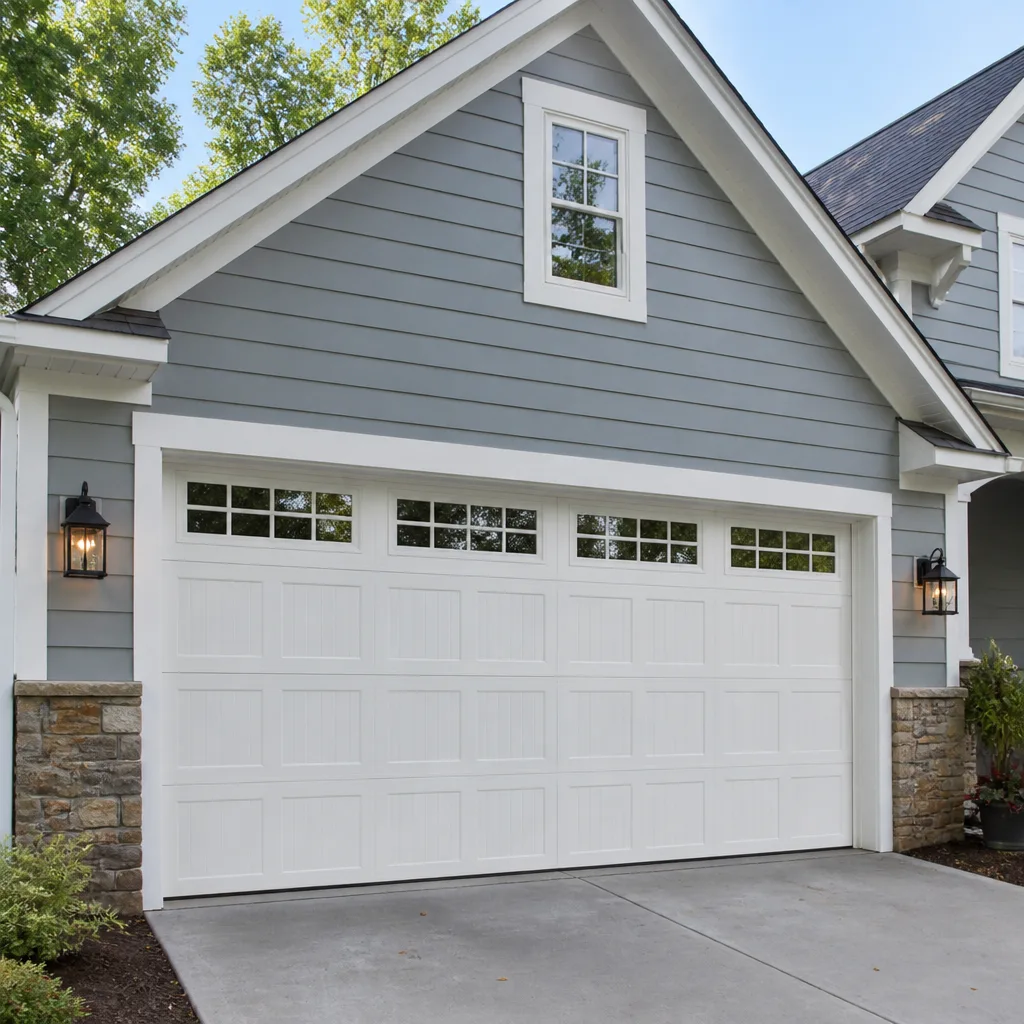 Chamberlain openers
Full 25-point door and opener safety check with every visit - springs, cables, rollers, tracks, and your LiftMaster or Chamberlain opener included
You get a price before we start. It does not change when the pro arrives.
Get your free estimateSeasonal Garage Door Care for Stonecrest: Year-Round Homeowner’s Guide
Most seasonal garage door advice is written for a place that has four roughly equal seasons. Stonecrest doesn’t. What we have is a long, humid summer that quietly corrodes hardware and cooks rubber seals, a short but genuinely freezing winter that contracts metal and cracks weatherstripping, and two transition periods where deferred problems finally surface. The result is that a maintenance calendar built for a northern climate misses almost everything that actually wears out a door here. In this guide we’ll walk through what each stretch of the Stonecrest year does to your door, which tasks belong where, and how to tell the difference between a one-time adjustment and cumulative wear. Stonecrest Garage Door Repair covers the full arc, from a snapped cable to scheduling the installation of a brand-new door.
Quick Answer
The most useful seasonal garage door care in Stonecrest is timed to our real conditions: clean and inspect hardware in spring before storm season, watch seals and opener heat in summer, adjust and lubricate in fall before the first frost, and check spring tension and balance after winter freezes. Rubber weatherstripping here often cracks within two to three years from UV exposure and ozone during long summers, so seal checks matter more than most calendars suggest.
Styles & brands we work with
- Raised-panel steel
- Carriage house
- Modern flush
- Full-view glass
- LiftMaster openers
- Chamberlain openers
Table of Contents
- Why Stonecrest’s Seasons Don’t Split Into Four Equal Parts
- Spring: Storm Season and the Wind Pressure Cycle
- Summer: Humidity, UV, and Heat on Your Opener
- Fall: Timing Tasks to Stonecrest’s First Frost
- Winter: Short Freezes, Real Stress on Seals and Springs
- The Two Transition Periods Where Problems Surface
- One-Time Adjustment or Cumulative Wear?
- What to Check Yourself and What to Leave Alone
Why Stonecrest’s Seasons Don’t Split Into Four Equal Parts
A garage door in Stonecrest lives through a different stress profile than one in Minnesota or Arizona. Our summer is long and humid, not a brief warm spell. Our winter is short but does drop below freezing, and those freeze-thaw swings do more seal damage than a steady deep cold would. If you follow a generic “inspect in spring, prepare in fall” schedule, you’ll miss the summer-specific failures that dominate here and the post-freeze checks that catch problems early.
Think of it as three material problems on a rolling calendar:
- Moisture and heat (late spring through early fall): humidity swells wood door panels, UV and ozone crack rubber seals, and attic-level heat stresses opener circuit boards.
- Freeze-thaw (winter, concentrated): metal contracts, weatherstripping stiffens and splits at the folds, and springs lose a little tension.
- Wind pressure cycling (spring storm season): repeated gusts flex panels and load the track and hinge points.
Once you see the year that way, the maintenance tasks sort themselves out. The goal isn’t a rigid quarterly checklist. It’s knowing which conditions are active and what they’re doing to your specific door. Stonecrest sits in a part of Georgia where all three of these cycles run every single year, which is why a local approach beats a copied national one.
Spring: Storm Season and the Wind Pressure Cycle
Spring in Stonecrest means storm season, and thunderstorms here bring gusts that push against a closed door repeatedly. That wind pressure cycling flexes the panels, loads the hinges, and can nudge a slightly loose track out of alignment over weeks. It rarely breaks a door in one gust; it works on hardware that was already marginal. A spring inspection is mostly about finding the loose bolts and shifted rollers that storm season will exploit.
Here’s the sequence we suggest for a spring walk-around:
- Look at the panels for dents or flex lines on the inside face, then check the hinges where the sections meet.
- Grab each roller and wiggle it. A roller that rattles in its bracket is loose or worn.
- Run a hand along the vertical and horizontal track, checking for bends or gaps at the curve.
- Test the balance: disconnect the opener and lift the door halfway. It should stay put, not drift.
- Check the weather seal along the bottom for cracks that opened over winter.
Wind pressure also stresses the opener’s travel limits. If the door starts reversing or stops short after a stormy stretch, the limits may have drifted. If you’d rather have a trained eye look at the opener and the door together, our garage door opener repair service covers both smart and legacy systems. It’s worth having a professional measure spring tension in spring, because that’s a part of the system you should never test by hand.
Summer: Humidity, UV, and Heat on Your Opener
Summer is where Stonecrest doors wear fastest, and it’s the season most national guides underplay. Three things happen at once. Wood door panels absorb moisture and swell, which can bind in the track or push panel edges out of alignment. Rubber weatherstripping takes direct UV exposure and ozone, cracking and hardening within two to three years. And the motor unit of your opener sits in a hot, often poorly ventilated space, where circuit boards run at the top of their temperature range for months.
What to watch for through a long Stonecrest summer:
- Swelling wood doors: a door that suddenly rubs or sticks at one edge may have absorbed humidity, not lost alignment.
- Seal cracks: a hardened, cracked bottom seal lets water and pests in and also signals the side and top seals are aging.
- Opener cutouts or erratic behavior: a unit that hesitates on hot afternoons may be an overheating board or a strained logic component.
- Rubber and plastic parts generally: rollers, seal flanges, and belt covers all age faster in sustained heat and UV.
Small tasks go a long way here: a light coat of lubricant on moving metal parts, a visual seal check, and a quick test that the door reverses when it meets an obstruction. Heat and humidity are also the two biggest reasons a garage door repair call spikes in July and August. If your opener is a Wi-Fi-enabled LiftMaster or Chamberlain unit, that’s exactly the kind of system we’re set up to diagnose.
Fall: Timing Tasks to Stonecrest’s First Frost
Fall advice usually says “before winter,” which is useless without a date. In Stonecrest, the first frost typically arrives in the short window of late October to early November, so the practical target is to get seasonal prep done by mid-to-late October. Everything you do in fall buys you stability through the freezing swings, and everything you skip shows up as a problem in January or February.
A fall preparation list:
- Adjust and lubricate the hinge points and rollers before temperatures drop and metal contracts.
- Inspect the bottom and side weather seals for cracks that will widen once they stiffen in the cold.
- Test the door balance again, since a door that’s slightly out of balance will feel worse once the springs are cold.
- Check track alignment and tighten loose bolts at the brackets.
- Look at the spring coils for gaps or a stretched appearance, and know that a failing spring is a job for a trained professional, never a DIY one.
Fall is also the right time to schedule anything that’s been deferred. If you’ve been noticing a door that runs louder or lags, the mild fall weather gives you room to fix it before the cold. When the problem is in the springs, Stonecrest’s garage door spring repair is a named, specialized service rather than a maybe-we’ll-try-it job.
Winter: Short Freezes, Real Stress on Seals and Springs
Stonecrest winters are short, but they’re not mild enough to skip. The freeze-thaw cycle matters more than a steady cold, because each freeze stiffens rubber and metal, then each thaw lets the seal settle into a slightly different shape. Over a winter that does this again and again, weatherstripping can crack at the folds and a spring’s tension can drift just enough to make the door feel heavier.
Winter checks that matter most:
- Seal condition: look for cracks at the corners and along the bottom edge, especially where the rubber folds.
- Spring sound and feel: a door that bangs, groans, or jumps mid-travel in cold weather is telling you something.
- Cold-door balance: test the balance on a cold morning. If it drops on its own, get it looked at.
- Cable and drum inspection: visually check for frayed cables, but never touch them.
- Weatherstripping gaps: seal gaps at the sides and top to keep cold air, moisture, and pests out.
The short but sharp cold also plays a role in opener performance. Cold grease stiffens slightly and a marginal drive train will feel it. If your unit is a Craftsman or Raynor setup that’s been behaving oddly as the temperature drops, a technician familiar with that specific system is worth the call.
The Two Transition Periods Where Problems Surface
The two moments when most Stonecrest garage door issues appear are the spring-to-summer shift and the summer-to-fall shift. It’s not a coincidence. Those are the points where conditions change fast, and hardware that had adapted to one regime gets pushed by the next. A door that ran fine in a mild early June might struggle when the true summer heat and humidity arrive in July. A door that ran fine in September might start behaving differently the first time the temperature drops overnight in October.
Why these transitions expose problems:
- Temperature swings hit marginal parts first. A roller that’s already worn will announce itself when the weather changes.
- Moisture shifts wood and rubber. A humid stretch swells wood, and the following dry stretch shrinks it; seals behave the same way.
- Load patterns change. Storm winds and freeze-thaw touch parts of the system that mild weather leaves alone.
- Wear accumulates silently until the transition. Most of what you find in the transition was building for months.
The practical takeaway: if you do one inspection in Stonecrest, the best timing is right before each transition. That gives you a chance to catch the small problems before the weather does what the weather does. We see the same pattern every year: a wave of calls just after the transition, most of them for something a pre-transition check could have flagged.
One-Time Adjustment or Cumulative Wear?
Not every noise or hesitation means a part is failing. Some are adjustments you can make once. Others are the latest sign of cumulative wear and will keep coming back. Knowing the difference saves you money and tells you when a repair is the right answer instead of a re-adjustment.
Generally, these point to a one-time adjustment:
- A track that shifted after a storm and can be realigned.
- An opener limit that drifted and needs a reset after a weather change.
- Loose hinge bolts that need tightening after wind cycling.
- A slightly swollen wood edge after a humid stretch that eases as the season dries.
And these tend to signal cumulative wear:
- The same track keeps going out of alignment after you fix it.
- The door reverses at a consistent spot or feels heavy every cycle.
- Spring coils look stretched or the door won’t hold mid-travel.
- The bottom seal cracks in multiple places after a hot summer.
- An opener that hesitates repeatedly in the heat, not just once.
If you’re unsure, the safest move is to have a technician evaluate the whole system. Stonecrest handles brand-specific quirks across Wayne Dalton, LiftMaster, Chamberlain, Genie, Clopay, Amarr, Craftsman, and Raynor, which helps when the symptom could be a door problem, an opener problem, or both.
What to Check Yourself and What to Leave Alone
Some seasonal checks are perfectly safe for a homeowner. Others are genuinely dangerous, and a seasonal guide that doesn’t say so is doing you a disservice. The two things you should never handle yourself are the torsion springs and the cables that run along the sides of the door. Both are under extreme tension, and both can fail with enough force to cause serious injury. Don’t try to adjust, lubricate, or remove them, and don’t touch a cable that looks frayed.
Safe for you to do:
- Visual inspections of panels, tracks, and seals.
- Light lubrication of moving metal parts like hinges and rollers, using a manufacturer-appropriate product.
- Testing the balance by hand with the opener disconnected.
- Testing the auto-reverse feature by placing an object in the door’s path.
- Checking the opener’s manual release, which you should know how to use before you need it.
Leave to a trained professional:
- Torsion and extension spring work of any kind.
- Cable, drum, and bracket work.
- Track realignment when the door is under load.
- Any repair that requires the door to be held open while you work.
- Opener diagnostics on units with smart-home integrations or legacy logic boards.
That last point is worth repeating for anyone with a Wi-Fi-enabled LiftMaster or Chamberlain opener: the electronics side is less obviously dangerous than springs, but it’s where misdiagnosis costs the most. Our technicians have up to 11 years of experience, and they know the specific failure patterns of the eight major brands we support. If you want a professional to look at your system, we’re ready to help. Call (877) 792-7296. We answer 24/7. Fast dispatch from 7am to 7pm, Sunday through Friday.
Common Mistakes to Avoid
- Following a national calendar. A four-season schedule written for northern states misses the summer humidity and UV that drive most Stonecrest wear. Build your tasks around our actual conditions, not calendar quarters.
- Skipping the summer seal check. Rubber weatherstripping here cracks within two to three years from UV and ozone. Waiting until you feel a draft ignores the fact that the damage is already done.
- Assuming a noisy door is normal. A door that bangs, groans, or jumps is telling you something. In our experience, most noise complaints trace to a spring or balance issue that a check can catch early.
- Testing springs by hand. This is the single most dangerous mistake. Torsion springs are under extreme tension, and a homeowner should never try to adjust or inspect one beyond a visual look.
- Ignoring wood door swelling in humid months. A door that binds in July may have absorbed moisture, not lost its alignment. Treating it as an alignment problem makes the swelling worse.
- Deferring repairs until fall. A problem that appears in spring won’t improve over a long humid summer. Fixing small issues early prevents bigger ones later.
- Letting an opener overheat without a check. A unit that hesitates on hot afternoons is losing efficiency and often signaling a board issue. A quick check saves the cost of a full replacement.
See the difference
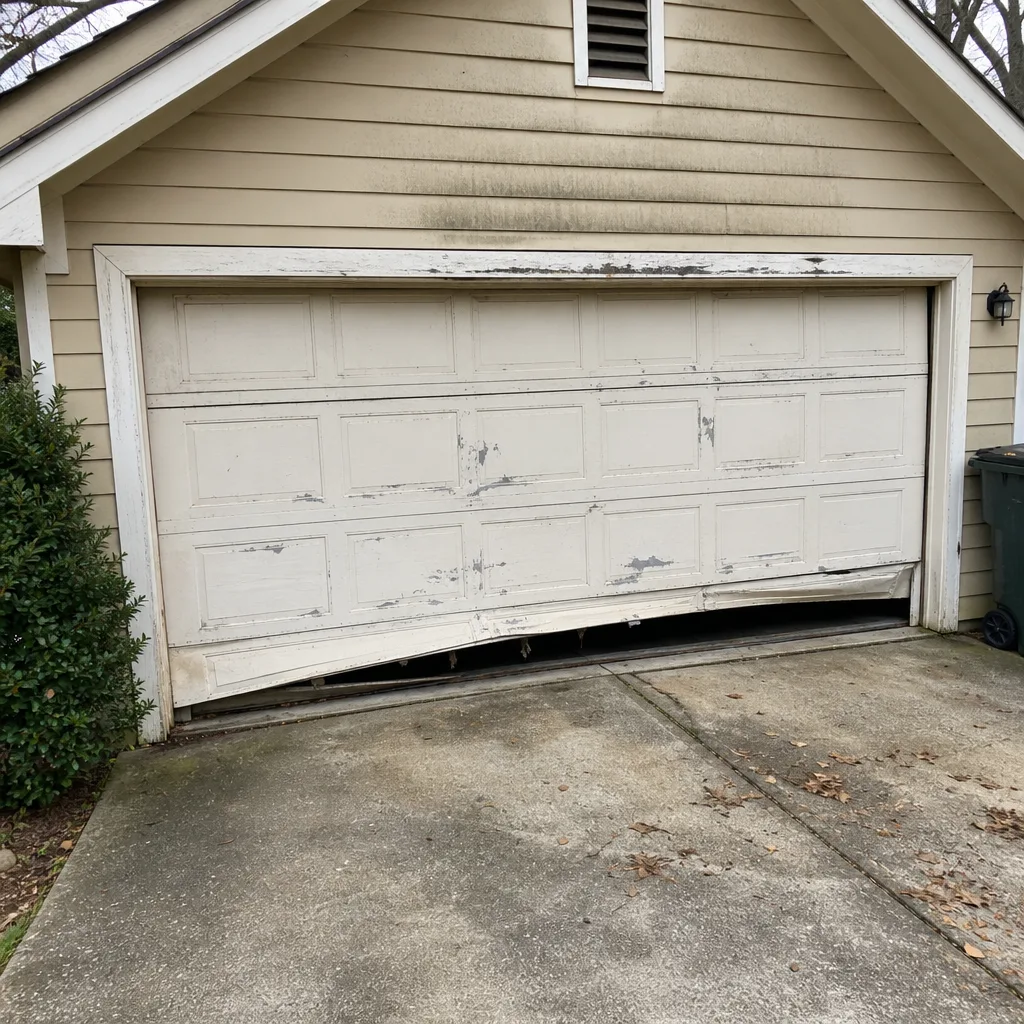 Before
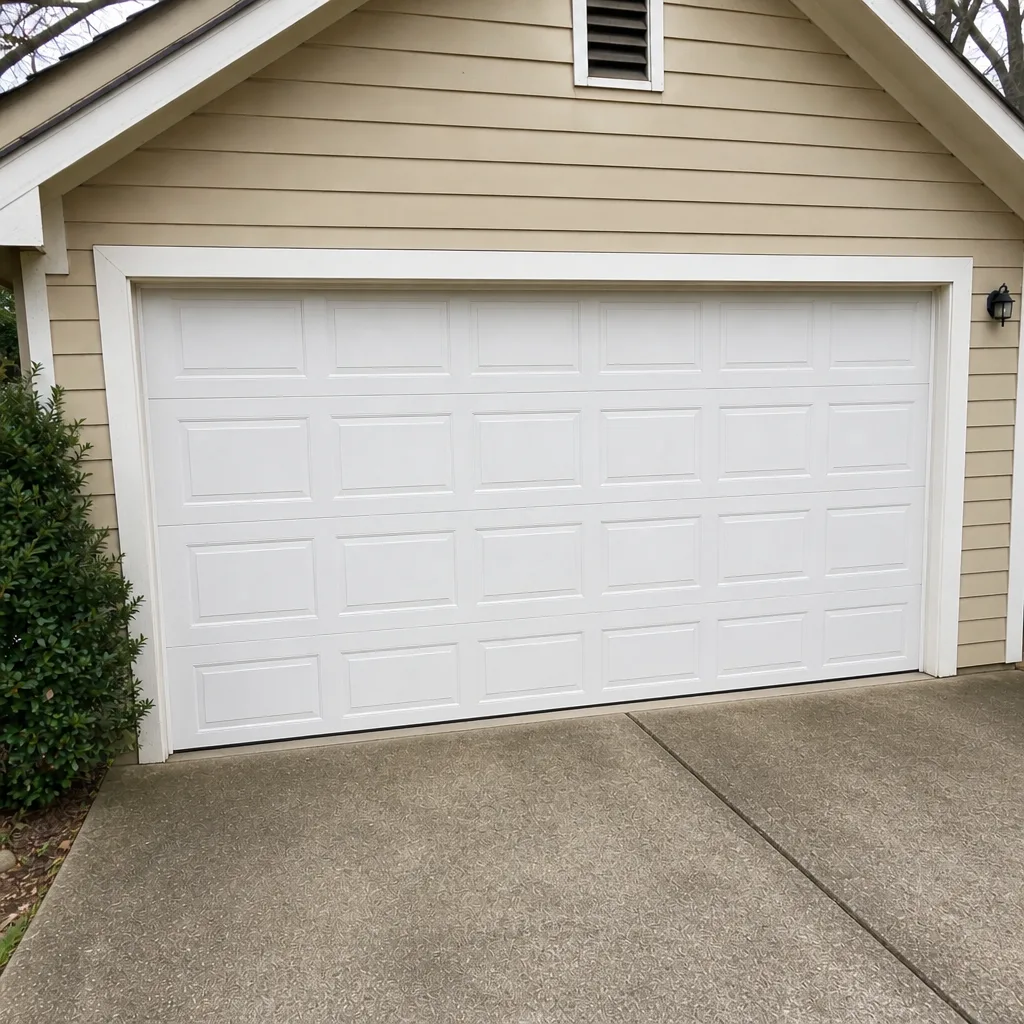 After
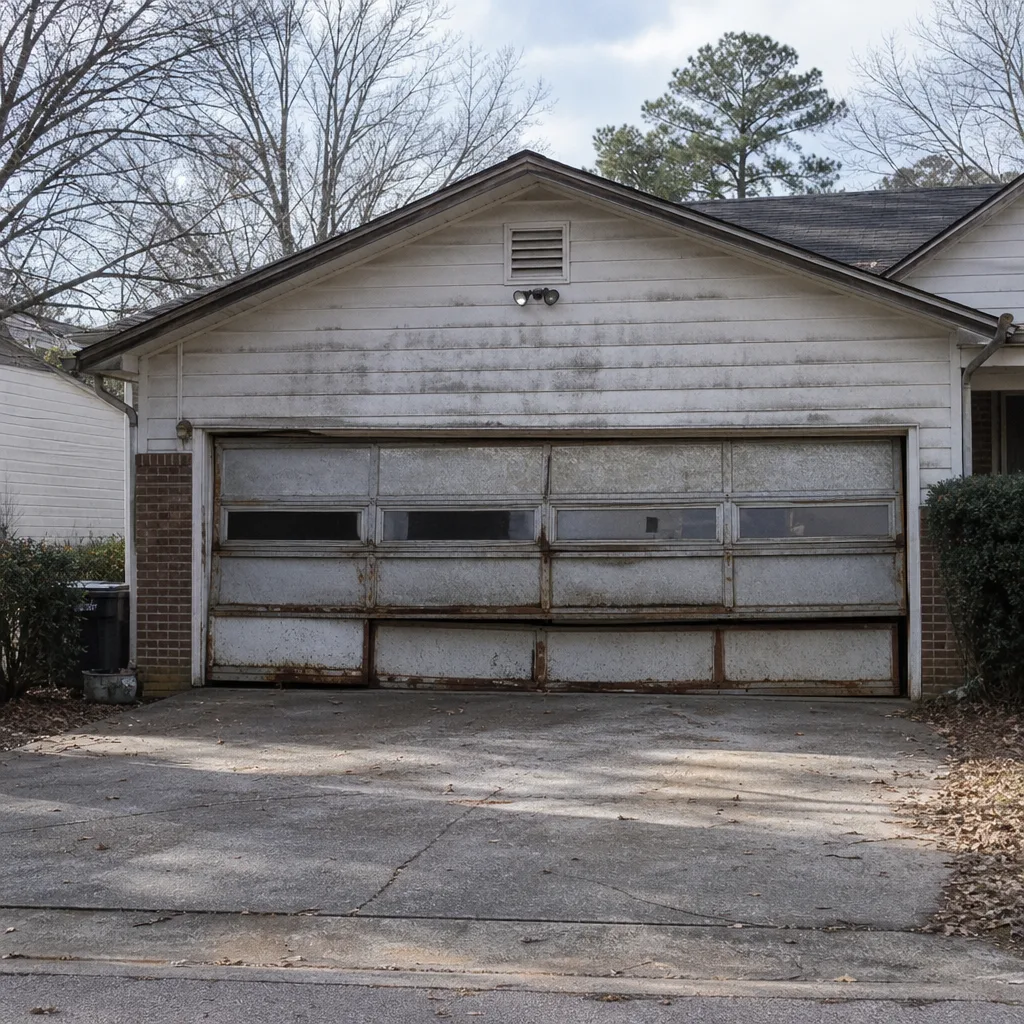 Before
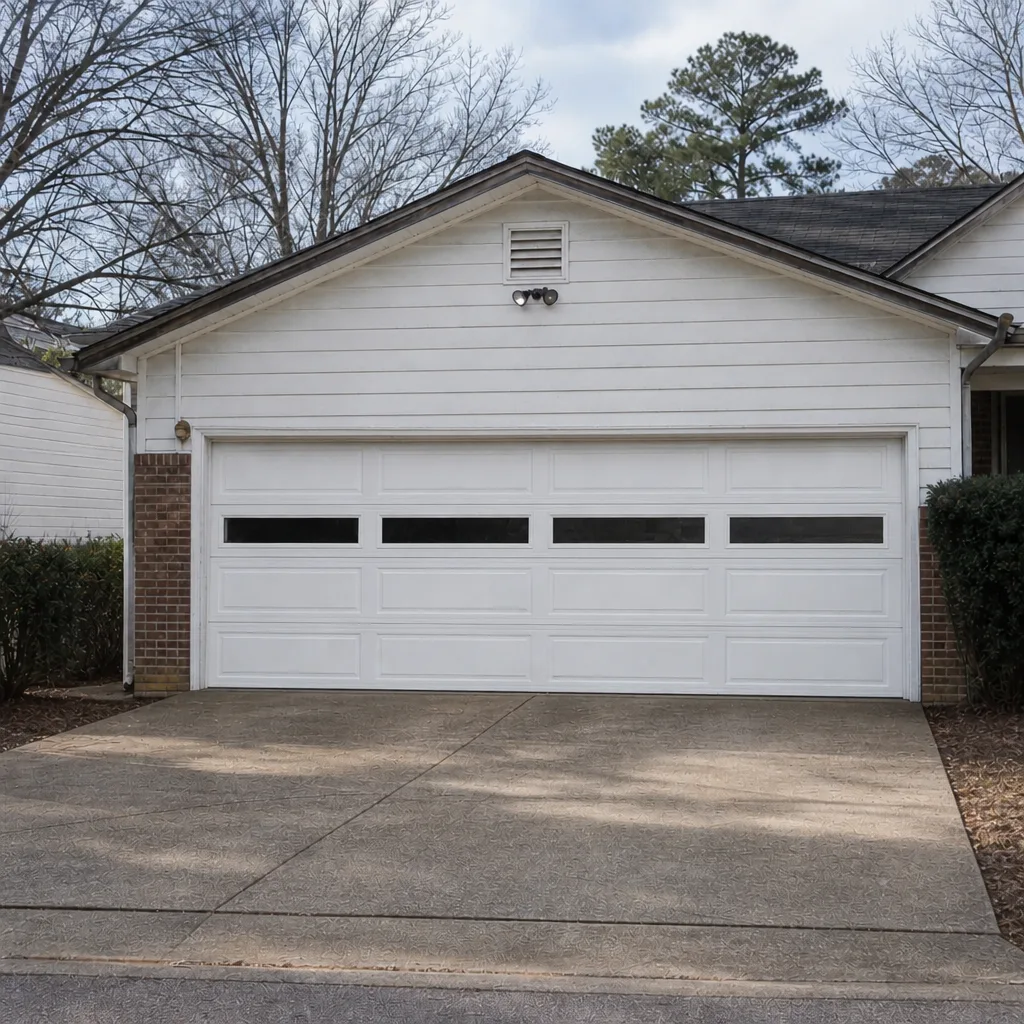 After
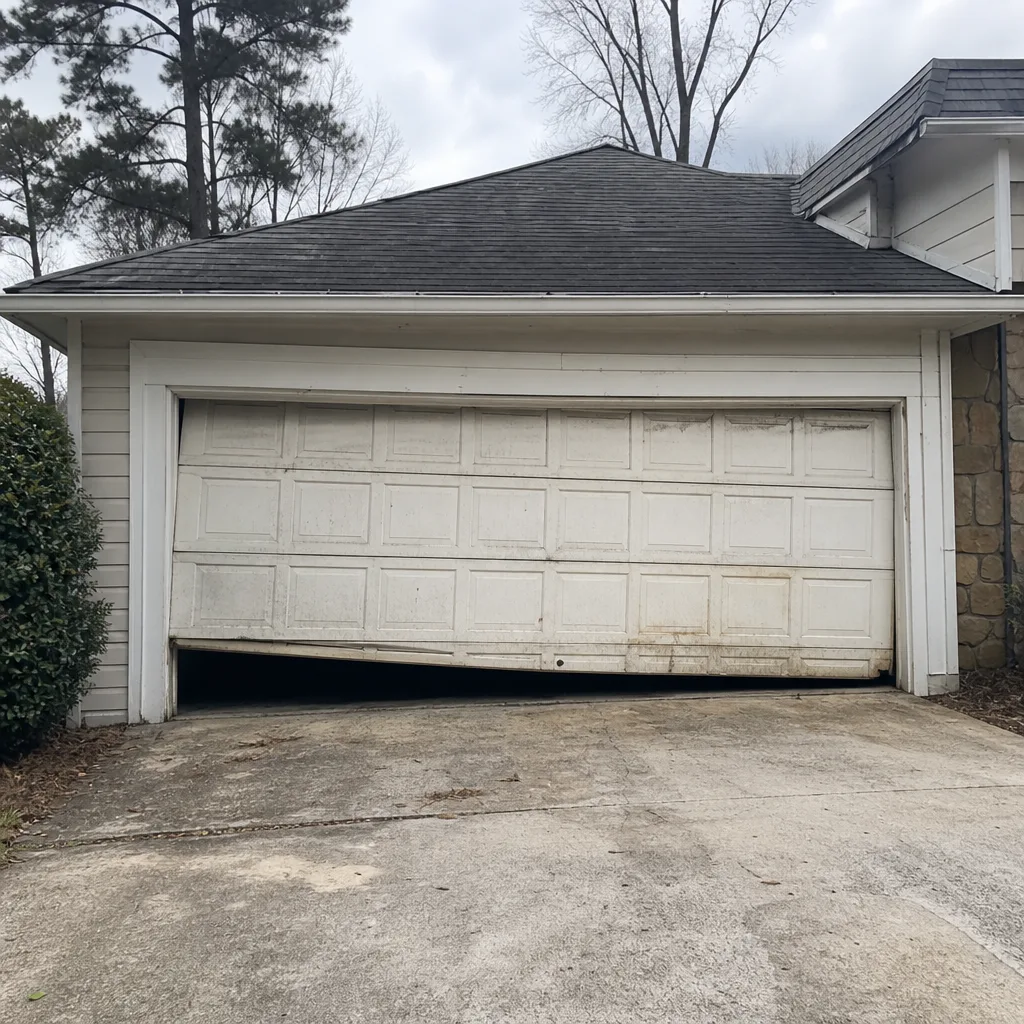 Before
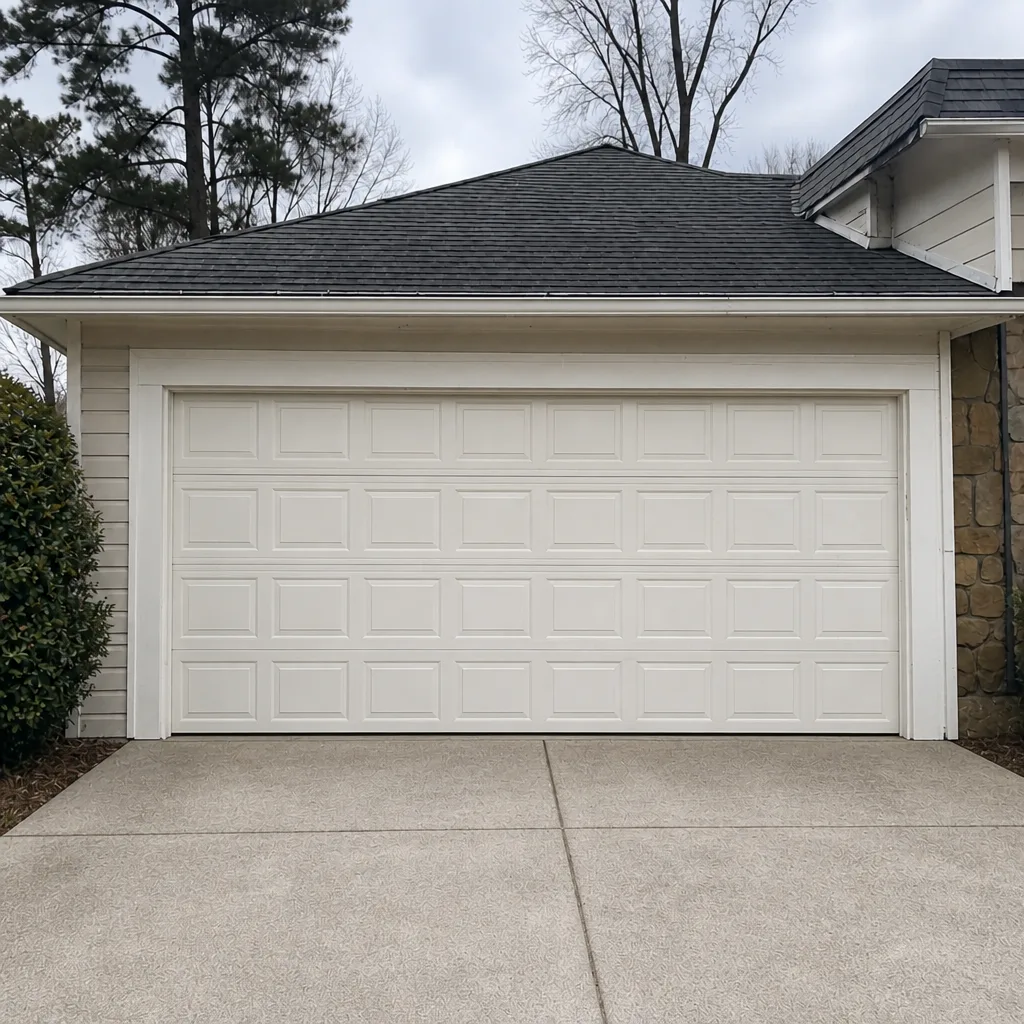 After
When to Call a Professional
Some seasonal problems are safe to handle yourself, and some aren’t. Call a professional when the door reverses or stops at the same point every cycle, when a spring looks stretched or the door won’t hold mid-travel, when a cable looks frayed, or when an opener keeps cutting out in the heat. Also call when you notice the same track going out of alignment more than once, or when a wood door binds and the fix isn’t obvious. Those are the cases where a seasonal symptom is actually cumulative wear, and the sooner it’s diagnosed the less expensive it is. Stonecrest Garage Door Repair offers free estimates in Stonecrest, so call (877) 792-7296 to get a straight answer about what’s going on with your door. We answer 24/7. Fast dispatch from 7am to 7pm, Sunday through Friday.
Frequently Asked Questions
Check the bottom and side seals at least twice a year in Stonecrest, in early summer and again in late fall. Rubber weatherstripping here often cracks within two to three years from the UV exposure and ozone of our long summers, so seal checks matter more than they would in a colder climate. If you see cracks at the folds, replace the seal. For a professional check, call (877) 792-7296. Estimates are free.
Yes, mainly focusing on seals and springs. Our winter is short but does drop below freezing, and the freeze-thaw swings stiffen rubber and metal more than a steady cold would. Test the door’s balance on a cold morning, look for cracks at the seal folds, and have a professional check spring tension. Never adjust a torsion spring yourself. Call (877) 792-7296 if anything feels off.
It can. The motor unit of your opener sits in a hot space, and circuit boards run at the top of their temperature range for months in Stonecrest’s long summers. A unit that hesitates on hot afternoons may be an overheating board or a strained logic component. Schedule a check before it fails completely. Call (877) 792-7296 for an exact quote; estimates are free.
Visual inspections, light lubrication of hinges and rollers, balance testing with the opener disconnected, and auto-reverse testing are all safe for a homeowner. The two things you should never handle yourself are the torsion springs and the cables, which are under extreme tension and can fail with enough force to cause serious injury. Call (877) 792-7296 if a spring or cable looks suspect.
Probably, yes. Stonecrest supports eight major brands: LiftMaster, Chamberlain, Genie, Clopay, Amarr, Wayne Dalton, Craftsman, and Raynor. That covers the door itself and the opener on most home systems. If you’re not sure which brand you have, our technicians can identify it during a visit. Call (877) 792-7296 to book a free estimate.
Seasonal maintenance is worth it because Stonecrest’s conditions wear parts faster than a generic climate. Spring storm winds, summer humidity and UV, and winter freeze-thaw each stress a different part of the system. A small check at each transition catches problems before they become repairs. If you’d rather have a professional do the checks, Stonecrest Garage Door Repair is here to help. Call (877) 792-7296. We answer 24/7. Fast dispatch from 7am to 7pm, Sunday through Friday.
The Bottom Line
Seasonal garage door care in Stonecrest isn’t about four equal seasons. It’s about mapping maintenance to three real conditions: long humid summers that swell wood and crack seals, short freezing winters that stress metal and rubber, and spring storm winds that load the whole system. If you time your checks to the two transition periods, before each shift, you’ll catch more than a rigid quarterly schedule ever would. And when something looks like cumulative wear rather than a one-time adjustment, get a professional to diagnose it before it becomes a bigger repair. Stonecrest Garage Door Repair is here to help with all of it, from inspection to installation. Call (877) 792-7296 for a free estimate. We answer 24/7. Fast dispatch from 7am to 7pm, Sunday through Friday.
Written by the team at Stonecrest Garage Door Repair.