
Last updated November 23, 2026
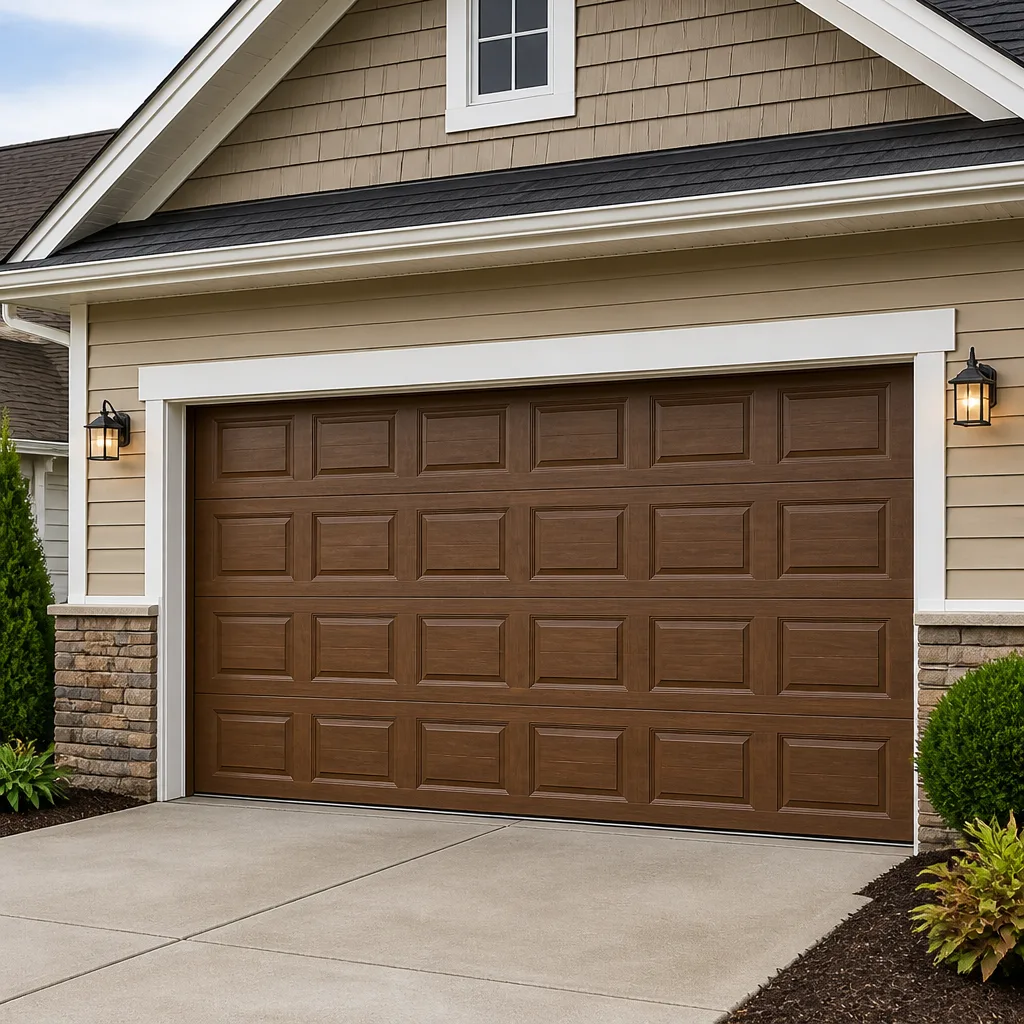 Raised-panel steel
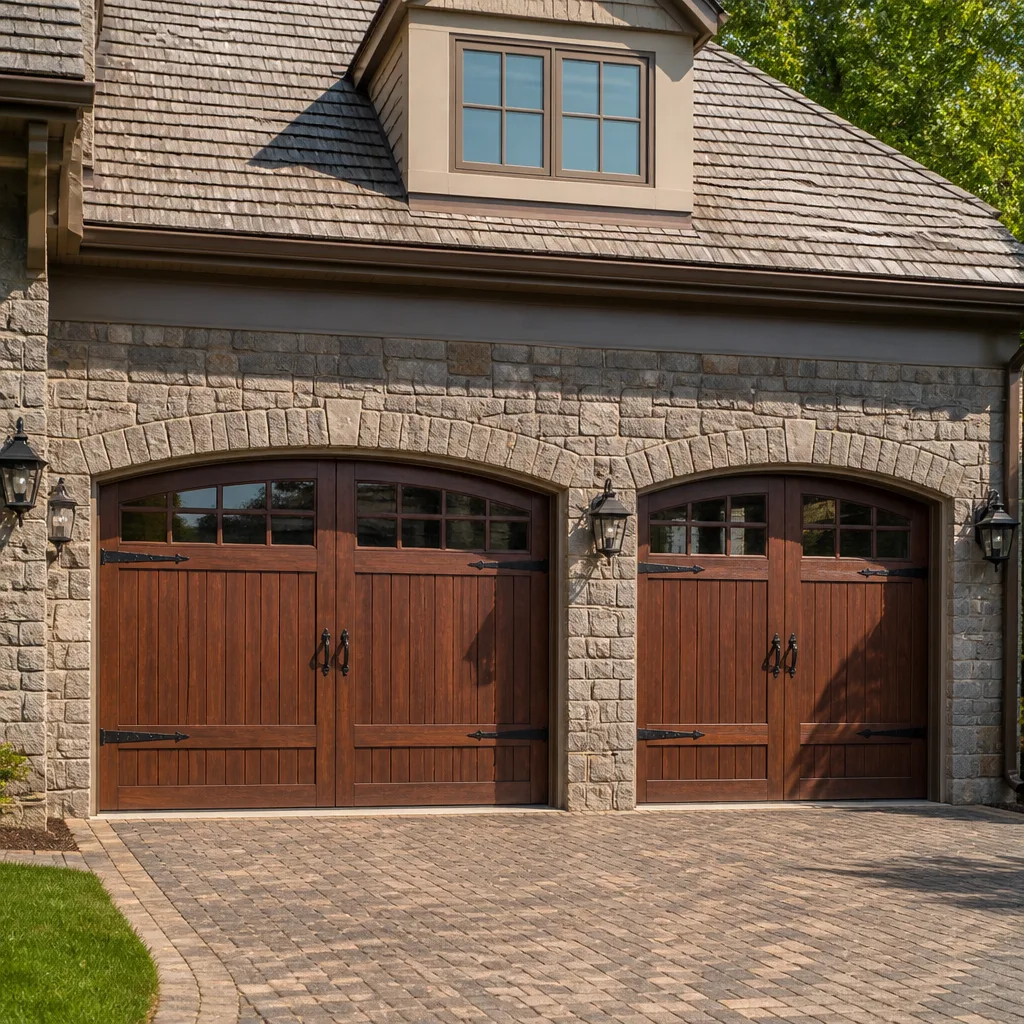 Carriage house
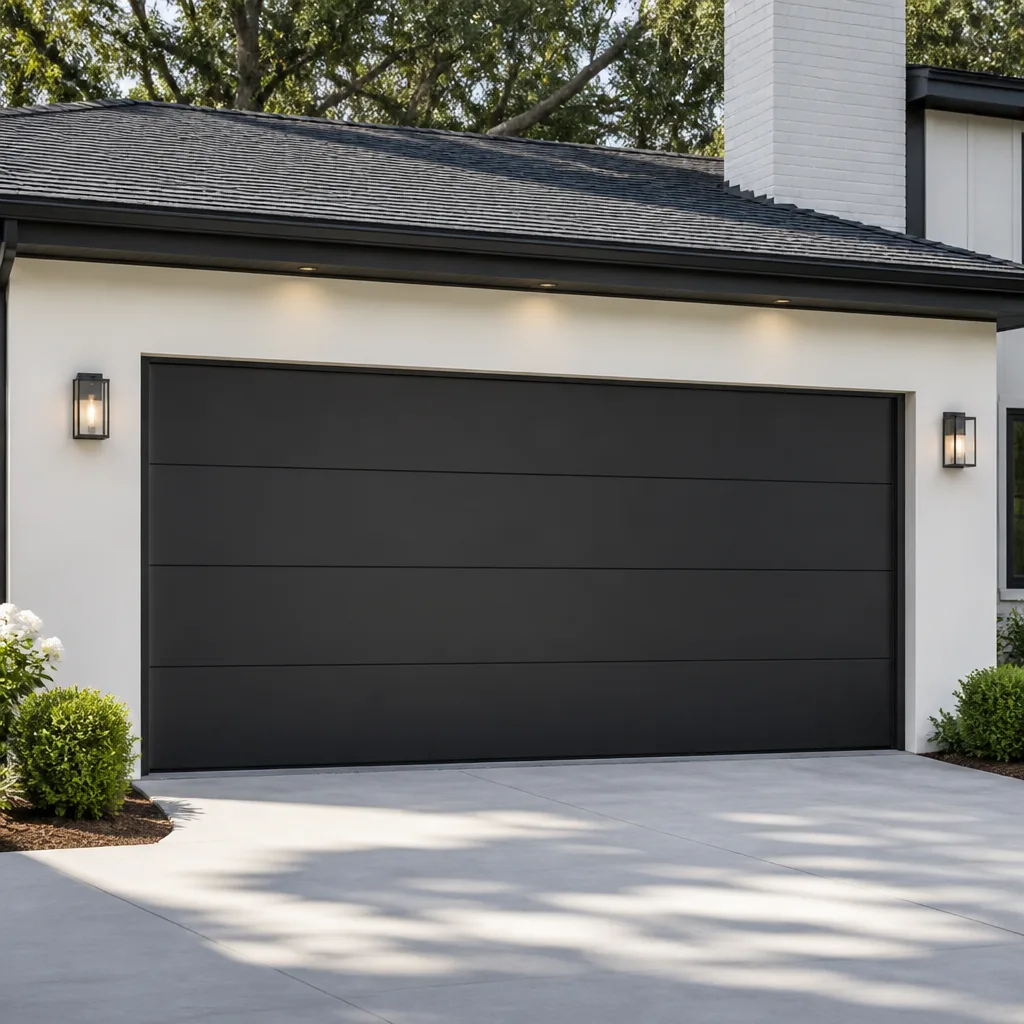 Modern flush
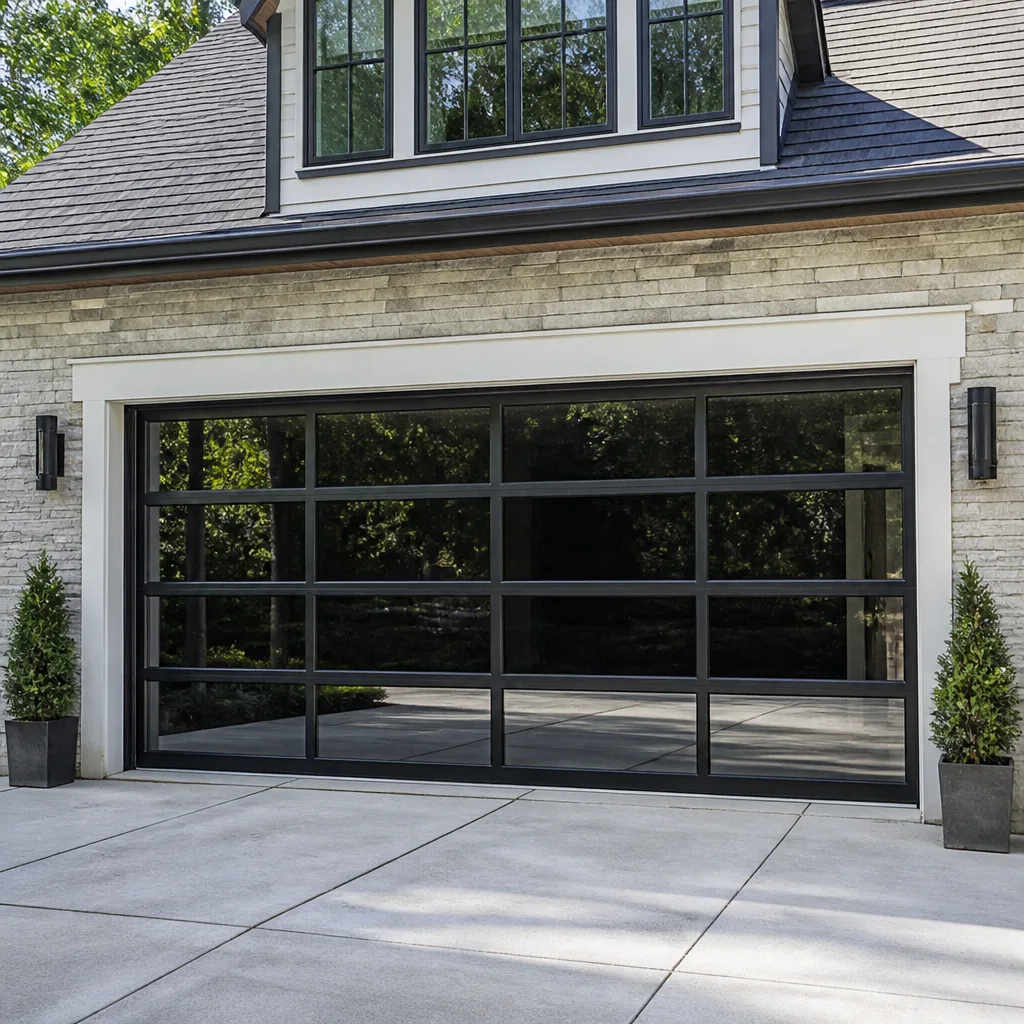 Full-view glass
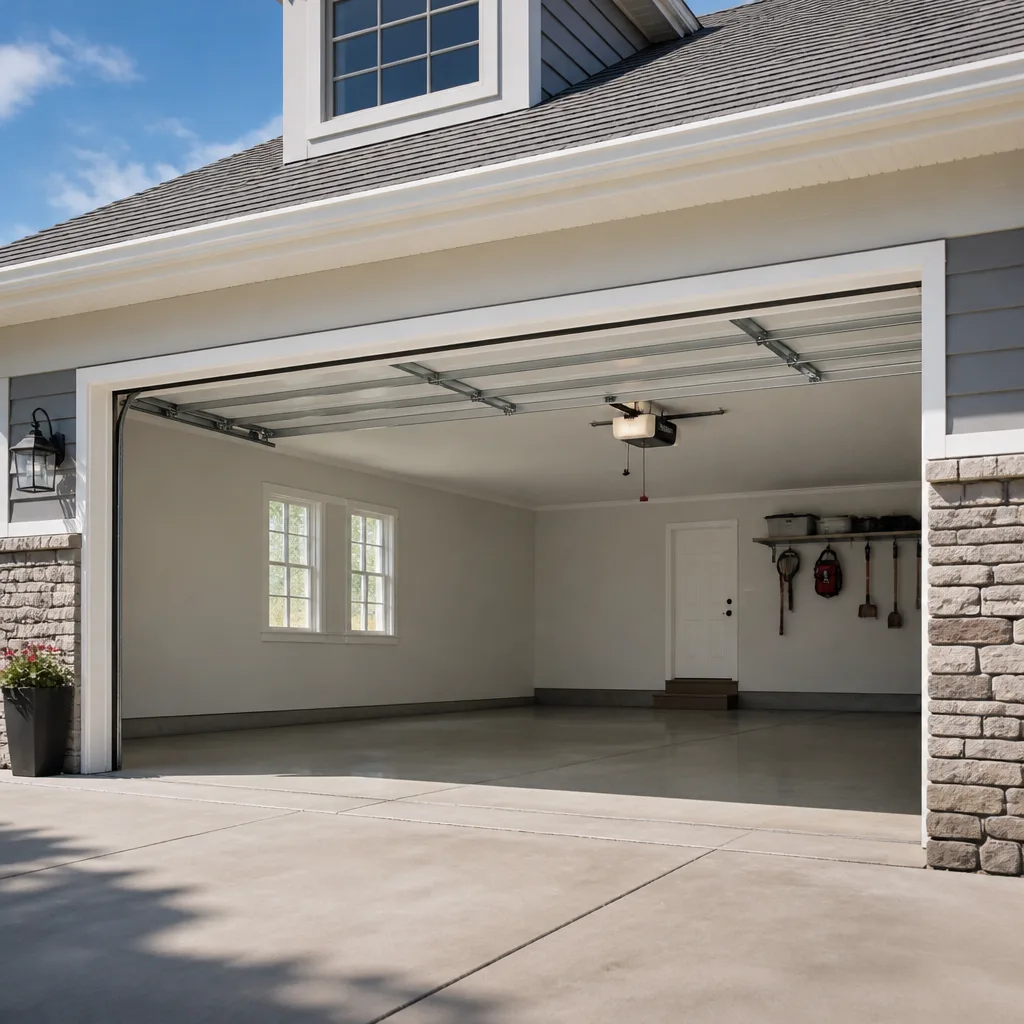 LiftMaster openers
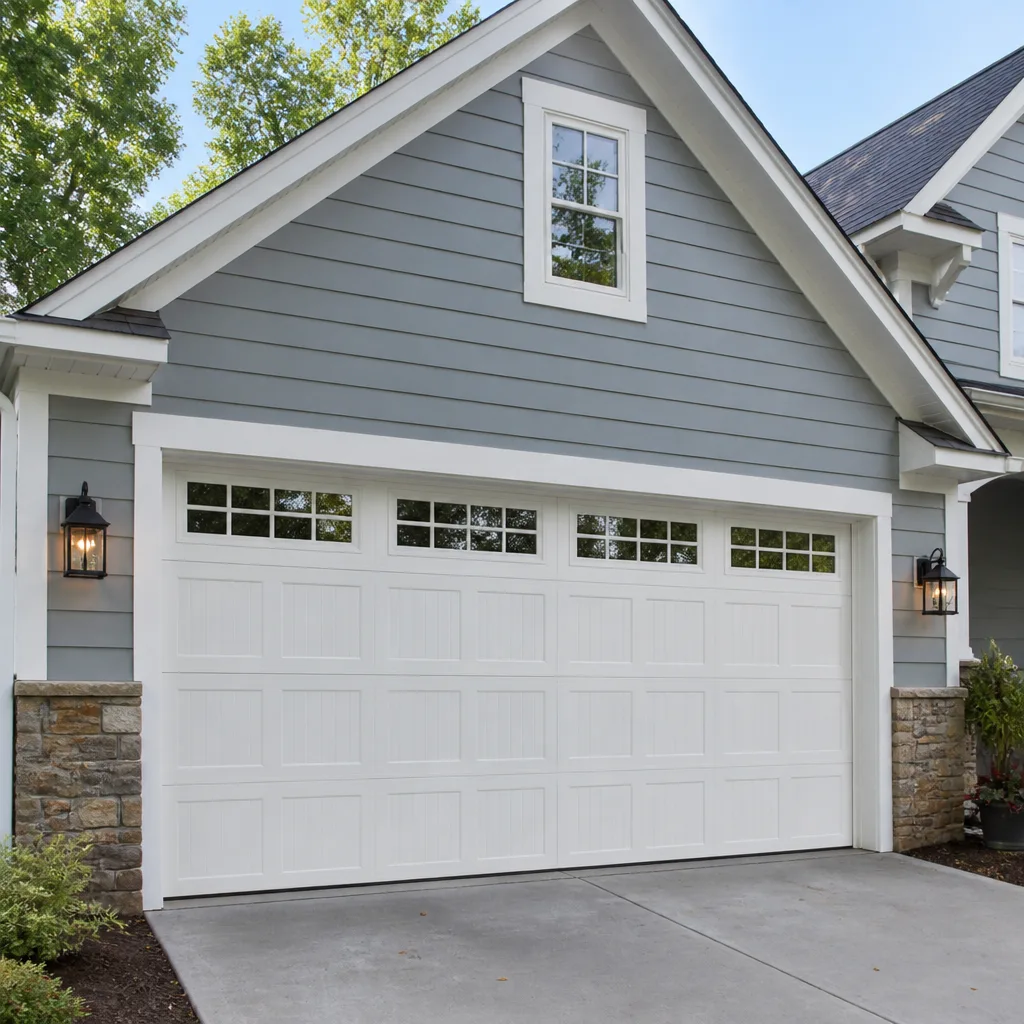 Chamberlain openers
Full 25-point door and opener safety check with every visit - springs, cables, rollers, tracks, and your LiftMaster or Chamberlain opener included
You get a price before we start. It does not change when the pro arrives.
Get your free estimateThe Complete Guide to Garage Doors in Stonecrest
Most garage door advice you’ll find online was written for a climate that isn’t yours. It talks about rust from road salt, about doors that freeze shut, about hardware that survives because the air stays dry. None of that describes Stonecrest. Here, the door on your house fights a different battle: Georgia red clay that holds moisture against the slab, humidity that hangs in the air for months, and summer storm fronts that slam a door panel with real force. And the homes themselves add another layer. A large share of Stonecrest subdivisions went up between 2000 and 2015, and builder-grade doors from that era are reaching the end of their designed cycle in large numbers right now. This guide explains what actually wears out here, how to read your own door’s condition, and when a repair makes more sense than a replacement.
Quick Answer
A garage door in Stonecrest usually lasts 15 to 25 years for the door itself, while the springs inside it are rated for roughly 10,000 open-and-close cycles and often fail first. Because most local homes were built between 2000 and 2015 with builder-grade doors and undersized springs, spring failure and opener wear are the two most common issues we see. Regular inspection of springs, cables, rollers and the opener’s balance is the single best way to catch a problem before the door stops working entirely.
Key Takeaways
- Springs are rated in cycles, not years. A door used four times a day burns through 10,000 cycles in under seven years.
- Georgia humidity accelerates corrosion on cables, hinges and bottom brackets far faster than dry climates.
- Builder-grade doors from Stonecrest’s 2000-2015 building boom often carry springs sized for lighter use than the door actually gets.
- Single-car and double-car doors fail differently, and double doors in larger Stonecrest homes stress their hardware more.
- A trained technician can read a door’s age and remaining life from the hardware, not just the date on the label.
Styles & brands we work with
- Raised-panel steel
- Carriage house
- Modern flush
- Full-view glass
- LiftMaster openers
- Chamberlain openers
Table of Contents
- How Stonecrest’s Climate Wears Out Garage Doors
- Why Newer Stonecrest Homes Have Doors That Fail Early
- How to Read Your Door’s Age and Remaining Life
- Single-Car vs. Double-Car Doors: Different Failure Patterns
- What Actually Breaks: Springs, Cables, Openers and Panels
- What Multi-Brand Support Means in Practice
- Repair or Replace? A Decision Framework
- A Maintenance Routine That Works in Stonecrest
How Stonecrest’s Climate Wears Out Garage Doors
Garage door hardware doesn’t fail on a calendar. It fails on exposure, and the exposure in Stonecrest is specific. The combination of high summer humidity and repeated temperature swings through spring and fall drives condensation onto metal parts every time the air warms faster than the steel does. That moisture sits on cables, hinges, rollers and bottom brackets. It doesn’t rust them overnight, but over several seasons it thins the galvanized coating and starts pitting the surface underneath. A door that would last twenty years in a dry climate often shows real corrosion by year eight or nine here.
The Georgia red clay around many Stonecrest properties adds a second problem. Clay holds water against the foundation and the garage slab long after rain stops. That keeps the humidity at the base of the door high, which is exactly where the bottom bracket, the bottom rollers and the lowest hinges live. It’s why we see bottom-section hardware fail before anything higher up.
Then there’s storm season. A garage door is the largest moving object on a house and it presents a broad, flat face to wind. During a strong front, the panels flex. Repeated flexing works the fasteners and the panel seams loose, and eventually a panel cracks or a section goes out of alignment with its neighbors.
- Humidity: condensation on cold metal accelerates corrosion on cables, hinges and brackets.
- Clay soil: trapped moisture keeps the base of the door damp, corroding bottom hardware first.
- Temperature swings: expansion and contraction loosen fasteners and stress panel seams over time.
- Storm winds: repeated flexing can crack panels and knock sections out of alignment.
The takeaway isn’t that Stonecrest doors are doomed. It’s that inspection intervals here should be shorter than the national advice suggests, and that a technician who knows the local pattern checks the bottom brackets and cables first, not last.
Why Newer Stonecrest Homes Have Doors That Fail Early
Here’s a fact that surprises a lot of homeowners: a newer door is not automatically a healthier door. Most Stonecrest subdivisions were built between 2000 and 2015, and the doors installed during that boom were typically builder-grade. That means insulated steel panels from a major manufacturer like Clopay or Wayne Dalton, fitted with springs sized to meet the builder’s specification rather than the door’s real-world use. On paper the setup is fine. In practice, a spring rated for a standard cycle count on a door that a family opens six or eight times a day reaches its limit years ahead of schedule.
The building boom also produced a lot of larger homes with double-car garages and taller doors. A taller, heavier door needs stronger springs. When a builder installs the same spring package across a whole subdivision regardless of door weight, the heavier doors in the neighborhood carry more stress per cycle. Those are the doors that start sagging, getting hard to lift, or snapping a spring while the lighter doors nearby are still fine.
The practical implication for Stonecrest homeowners is straightforward:
- Don’t assume “newer” means “good.” A door from 2008 may be closer to failure than one from 1995 if the springs were undersized for the door weight.
- Check the spring count and size. If you can identify the wire gauge and the length of the spring, a technician can tell you whether it matches the door’s actual weight.
- Watch for the early symptoms. A door that has become hard to lift by hand, or that hesitates on the way up, is telling you the springs are working beyond their rating.
- Plan for replacement instead of waiting for failure. Catching an undersized spring before it snaps lets you replace it on a scheduled visit instead of an emergency call.
An Amarr or Clopay door installed during the boom is a solid product. The weak link is usually the spring and hardware package chosen to hit a price point, not the door panels themselves.
How to Read Your Door’s Age and Remaining Life
You don’t need the original paperwork to estimate how much life is left in a door. The hardware tells you. A trained eye reads the wear pattern on the cables, the color of the hinges, the condition of the bottom bracket and the sound the door makes through its travel, and puts together a rough picture of where that door sits in its service life. Homeowners can do a version of the same inspection safely from the ground, without touching the springs or cables.
Here’s how to read it:
- Look at the cables. Frayed strands, rust or a cable that has started to flatten are signs the cable is near the end of its life. Cables are under extreme tension, so note what you see and leave any handling to a technician.
- Check the hinges. Hinges that are rusted through, loose in their mounting or squealing sharply on every cycle are worn. Rust on the lowest hinges first is normal in Stonecrest’s humidity and points to the bottom of the door.
- Inspect the bottom bracket and bottom seal. A cracked bracket or a seal that has hardened and pulled away from the floor tells you the base of the door has been taking on moisture.
- Test the balance by hand. With the door closed and the opener disconnected, lift the door about halfway and let go. A balanced door stays put. One that drops is telling you the springs are weak.
- Listen to the cycle. A door that grinds, squeals or hesitates is transmitting wear through its moving parts. Smooth and quiet is the goal.
- Look at the opener’s age. A chain-drive unit from the 2000s still works, but it has likely outlived its motor’s design life and may be the next thing to fail.
If two or more of those signs show up at once, the door is telling you it’s due for service. If the panels themselves are still straight and the frame is sound, the fix is usually hardware, not a new door.
Single-Car vs. Double-Car Doors: Different Failure Patterns
A single-car door and a double-car door are not just the same door at different widths. They load their hardware differently, and in Stonecrest’s housing stock that difference shows up in predictable ways. A single-car door is narrower and lighter. Its spring has less weight to counterbalance, and it typically cycles at a lower stress level per opening. Its most common failure is the opener, because a lighter door asks more of the motor than it does of the springs. Double-car doors are heavier, carry more panel flex across the span, and put more load on the torsion system. Their springs and cables tend to fail first.
Larger Stonecrest homes often have a double-car door plus a single-car door on the same house, or two double doors. When a family with two or three drivers opens both doors several times a day, the springs on the heavier doors accumulate cycles fast. That’s where the “why did the big door fail and the small one didn’t” question comes from.
- Single-car doors: opener wear, track alignment and roller noise are the usual culprits.
- Double-car doors: spring fatigue, cable wear and panel flex across the wider span.
- Two-door homes: the heavier or more-used door leads the failure timeline, so inspect the busier door first.
- Taller custom doors: higher weight and a longer travel distance per cycle, so the spring rating matters more.
If you have a double-car door, factor the higher load into your inspection schedule. Check the spring and cables more often than you would on a single door, and don’t be surprised when the wider door needs attention first. If your setup is unusual, or you’re unsure which part is failing, our garage door repair service is built to diagnose what’s actually in front of us, not just a generic checklist.
What Actually Breaks: Springs, Cables, Openers and Panels
Most garage door failures fall into four buckets, and each one has a distinct warning sign. Knowing which bucket you’re in helps you decide how urgently to act.
Springs. The torsion spring is the part that carries the door’s weight. It’s rated in cycles: a standard spring is good for roughly 10,000 cycles, and a high-cycle spring for considerably more. A family opening the door four times a day hits 10,000 cycles in under seven years. Springs don’t creep toward failure so you can plan around it. They fail suddenly, usually with a loud bang, and they leave the door too heavy to lift by hand. This is the most dangerous part of the whole system, which is why spring work needs to be treated as a specialized repair, not a general handyman job. Springs, cables and the hardware that holds them under tension can cause serious injury, so we don’t recommend homeowners attempt spring replacement themselves.
Cables. Cables run alongside the springs and keep the door balanced. Frayed or corroded cables are a leading cause of sudden failure, and Stonecrest humidity pushes cable corrosion along faster than you’d expect. A cable with visible rust or separated strands needs replacement before it snaps.
Openers. An opener is a motor, a rail and a control board, and it ages like any electric motor. A chain-drive unit from the 2000s still works, but it’s living on borrowed time. Newer openers may be Wi-Fi enabled, and older ones use a simple wall button. When an opener starts failing, the symptoms are usually clear: the door opens a few inches and stops, the motor runs but the door doesn’t move, or the remote works intermittently. That’s the point to look at garage door opener repair rather than wait for the door to stop entirely.
Panels. A cracked or dented panel is usually the result of a bump or storm flexing. A single panel can often be replaced without replacing the whole door, provided the door is still available from its manufacturer in that panel style.
Our technicians have up to 11 years of experience working on all four of these, and in our experience the spring and cable failures are the ones homeowners most often mistake for an opener problem.
What Multi-Brand Support Means in Practice
A lot of companies say they “service all brands.” What that actually means when a technician shows up matters more than the slogan. Real multi-brand support means the technician knows how a Genie opener’s limits and force settings differ from a LiftMaster’s, how a Clopay door’s track and panel clearances differ from an Amarr’s, and how a Wayne Dalton spring system may need a specific approach. It means bringing the right parts for the system in front of them instead of guessing and making a second trip.
We work on doors and openers from eight major brands: LiftMaster, Chamberlain, Genie, Clopay, Amarr, Wayne Dalton, Craftsman and Raynor. That mix covers most of what’s installed in Stonecrest homes. The value isn’t the logo list. It’s the quirks. Each brand has its own fastener patterns, spring anchor designs, opener logic and remote pairing procedures, and a technician who knows them diagnoses faster and replaces the right part the first time.
- Opener systems: LiftMaster, Chamberlain, Genie and Craftsman cover the majority of residential openers.
- Door systems: Clopay, Amarr, Wayne Dalton and Raynor cover most of the panels and tracks in the area.
- Why it matters: fewer second trips, correct parts on the first visit, and a repair that accounts for the actual system rather than a generic one.
If your system is outside our supported brands, tell us when you call and we’ll be straight with you rather than arrive unprepared. That’s part of what a real multi-brand shop owes a customer.
Repair or Replace? A Decision Framework
The repair-versus-replace question has a clear answer most of the time, and you can get to it by answering four questions. The first is: how old is the door? A door under 15 years old usually has plenty of life left in its panels and frame, so repair makes sense. A door past 20 with multiple failing parts is usually a candidate for replacement. The second: what’s failing? A spring, cable or opener is a repair. Cracked panels, a rusted-through frame or a track that has bent beyond realignment are replacement territory. The third: how much of the door is still sound? If the panels are straight, the tracks are aligned and the springs are the only issue, fix them. The fourth: do you already want a better door? If you’re replacing to get better insulation or a newer look, that’s a legitimate reason on its own.
- Under 15 years old, single part failing: repair. The door has plenty of life left.
- Over 20 years old, multiple parts failing at once: replacement usually makes more financial sense than repeated repairs.
- Panels straight and frame sound: repair the hardware. The panels are the expensive part, and they’re fine.
- Panels cracked or frame rusted through: replacement. There’s no lasting repair for structural damage.
- You want better insulation or a new look: replacement is a valid goal on its own.
Our garage door spring repair work is a good example of the repair side of that logic. A snapped spring is a single-part failure, and a well-built door with a fresh spring can last many more years.
A Maintenance Routine That Works in Stonecrest
A garage door is a machine, and machines last longer with care. The maintenance routine that works in Stonecrest is shorter than the national advice suggests, because the local climate runs hardware harder. Here’s what actually makes a difference:
- Inspect the springs monthly. Look for gaps in the coils, rust or a spring that looks stretched. Don’t touch them; a visual check is enough, and anything that looks wrong means a call.
- Check the cables and hinges seasonally. Rust and fraying are the signs. In Stonecrest, spring and fall are the two checkpoints worth keeping.
- Lubricate moving parts with a proper door lubricant. Rollers, hinges and the torsion spring receive a bit of lubricant once or twice a year. A dry door squeals and wears faster.
- Test the balance every six months. Disconnect the opener, lift the door halfway and let go. It should stay.
- Look at the bottom seal. A cracked or hardened seal lets moisture in and can jam the door. Replace it when it stops flexing.
- Test the safety reverse. Put a small object on the floor under the door and close it. The door should reverse. If it doesn’t, the opener’s safety system needs attention.
Not every task belongs on a homeowner’s list. Spring and cable adjustments require the right tools and training, and the tension is enough to cause serious injury. The safe routine is inspection and lubrication; anything involving the torsion system should go to a professional.
Common Mistakes to Avoid
- Judging door health by build year alone. A 2008 Stonecrest home can have a door closer to failure than a 1995 one if the springs were sized for lighter use. Read the hardware, not the calendar.
- Ignoring the bottom of the door. Georgia clay keeps moisture at the slab, so the bottom bracket, lowest hinges and bottom seal corrode first. Those are exactly the parts people forget to check.
- Assuming a weight it can’t carry. A door that’s getting hard to lift by hand is telling you the springs are weak. Waiting for the spring to snap turns a planned repair into an emergency.
- Replacing the opener when the spring is the problem. A door that opens a few inches and stops is usually a spring issue, not a motor issue. Diagnose before you buy a new opener.
- Skipping lubrication because “it still works.” A dry door wears its rollers and hinges faster and eventually takes its opener with them. Two minutes twice a year saves money.
- Attempting spring or cable work yourself. Those parts are under extreme tension. It’s one of the few garage door jobs that genuinely belongs to a professional.
- Trusting a generic repair checklist. Stonecrest’s climate and its 2000-to-2015 building stock create failure patterns that national advice doesn’t capture. A local technician checks for the local problems.
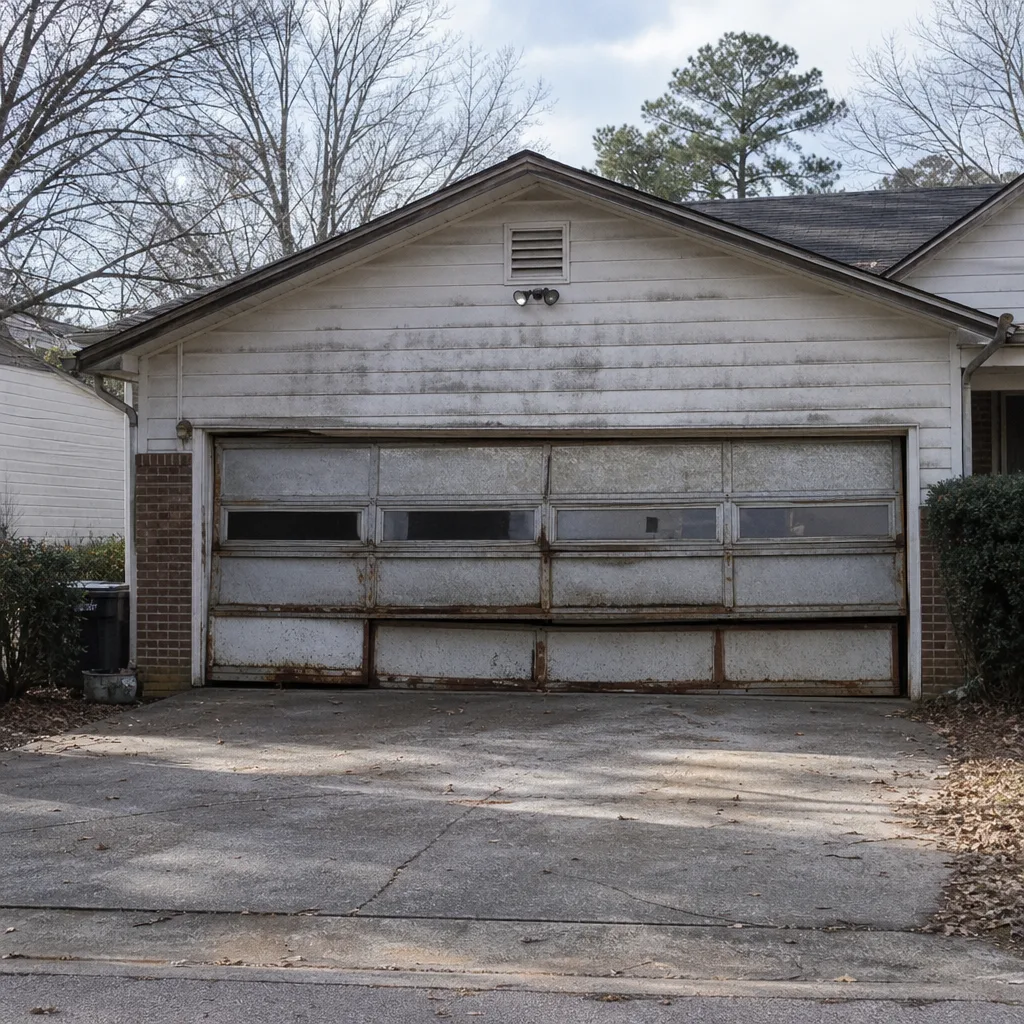
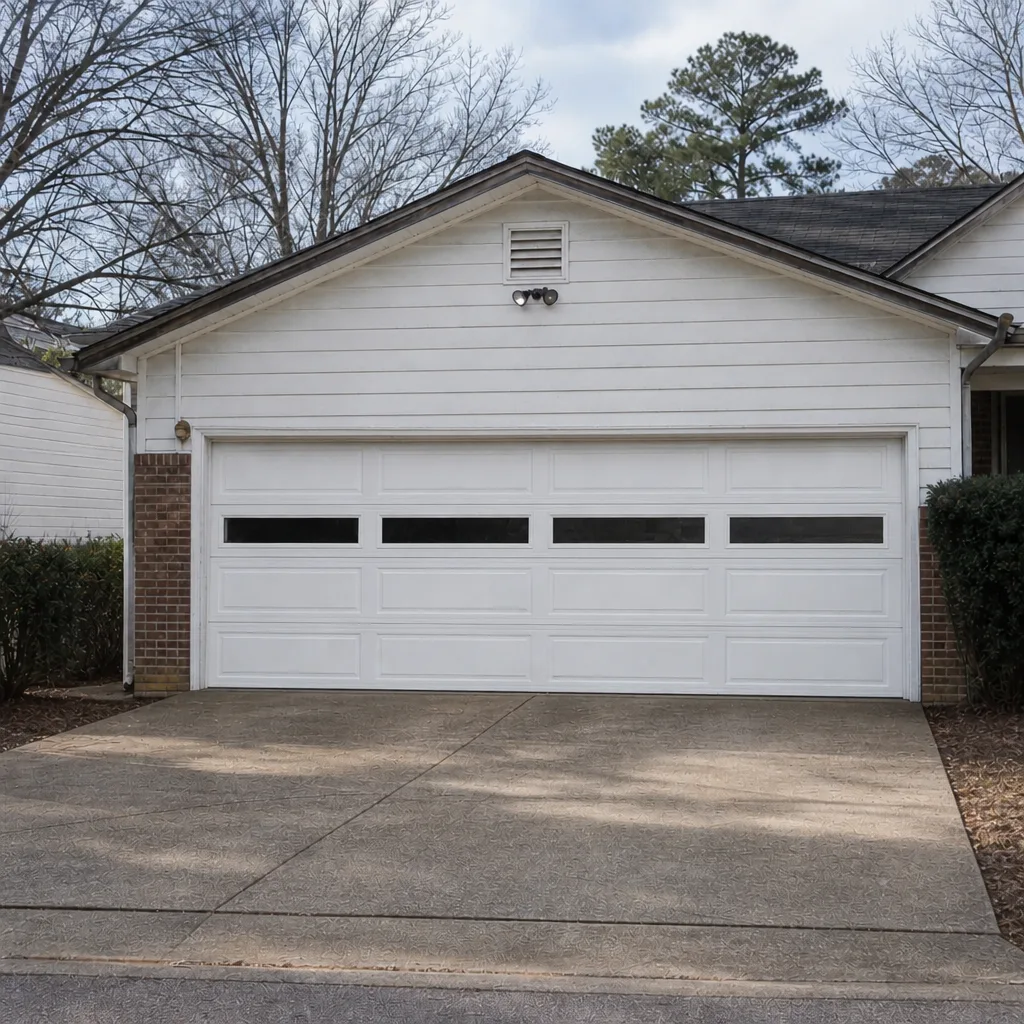
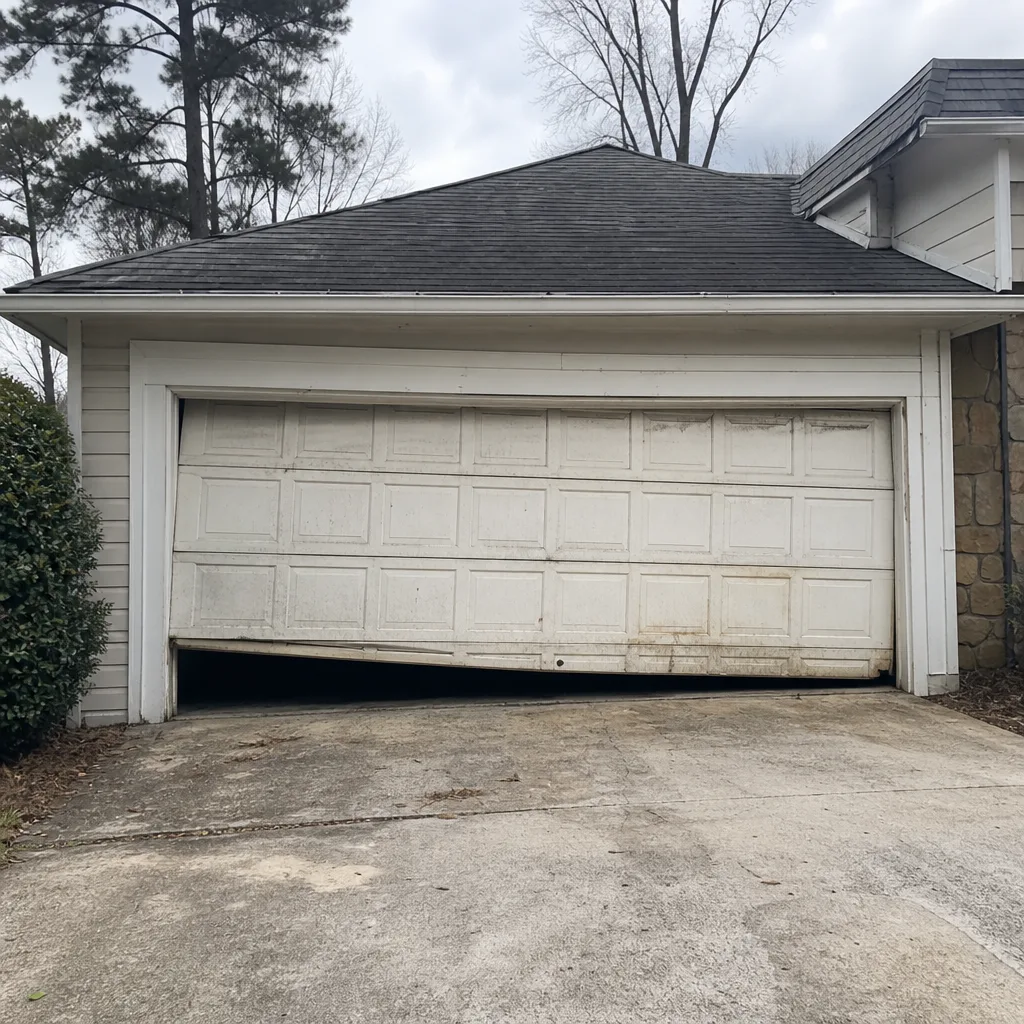
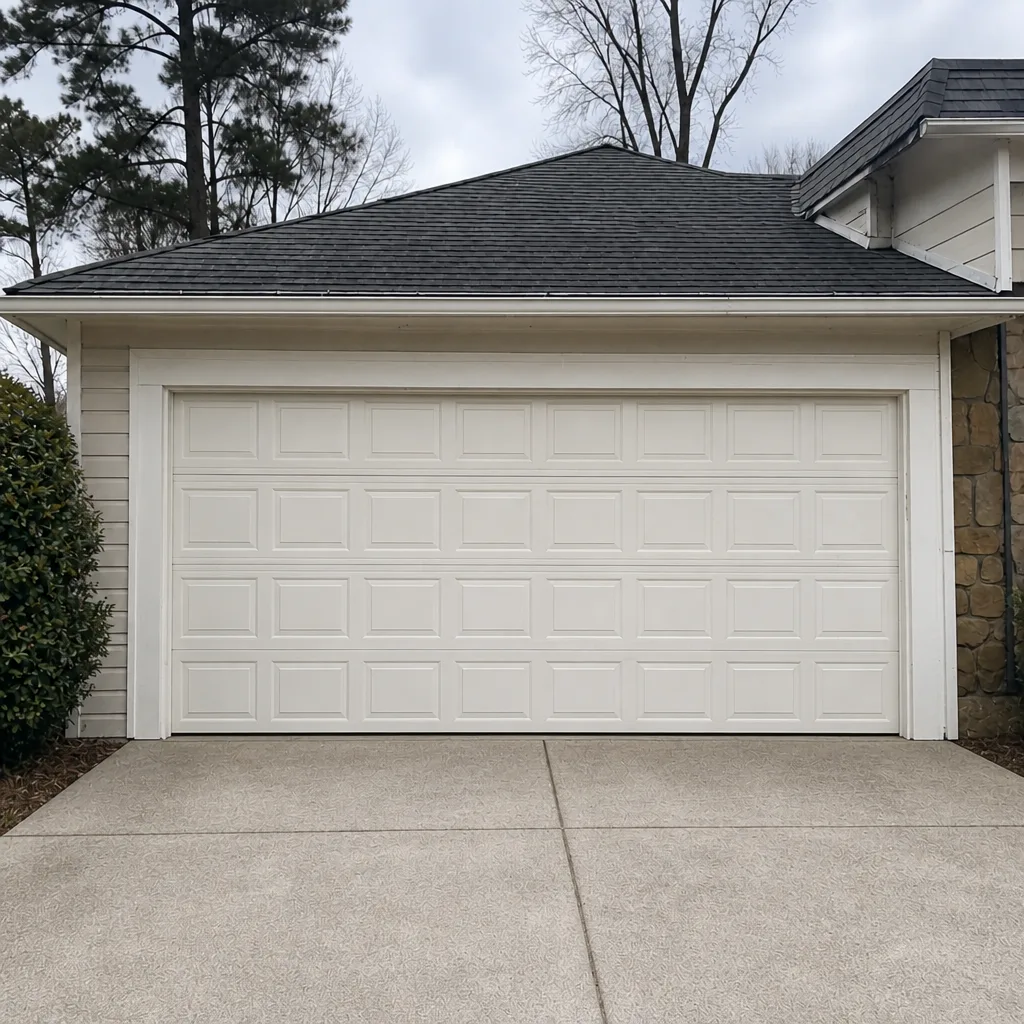
See the difference
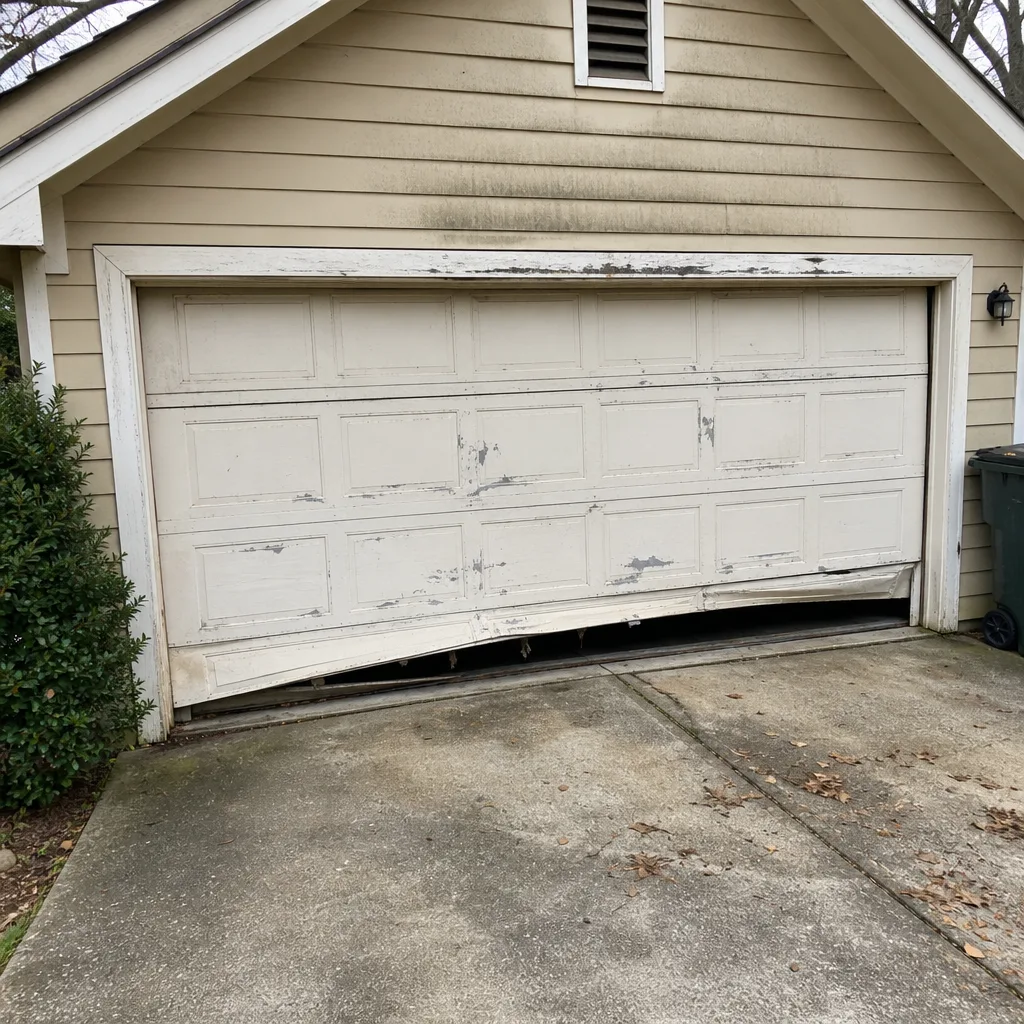 Before
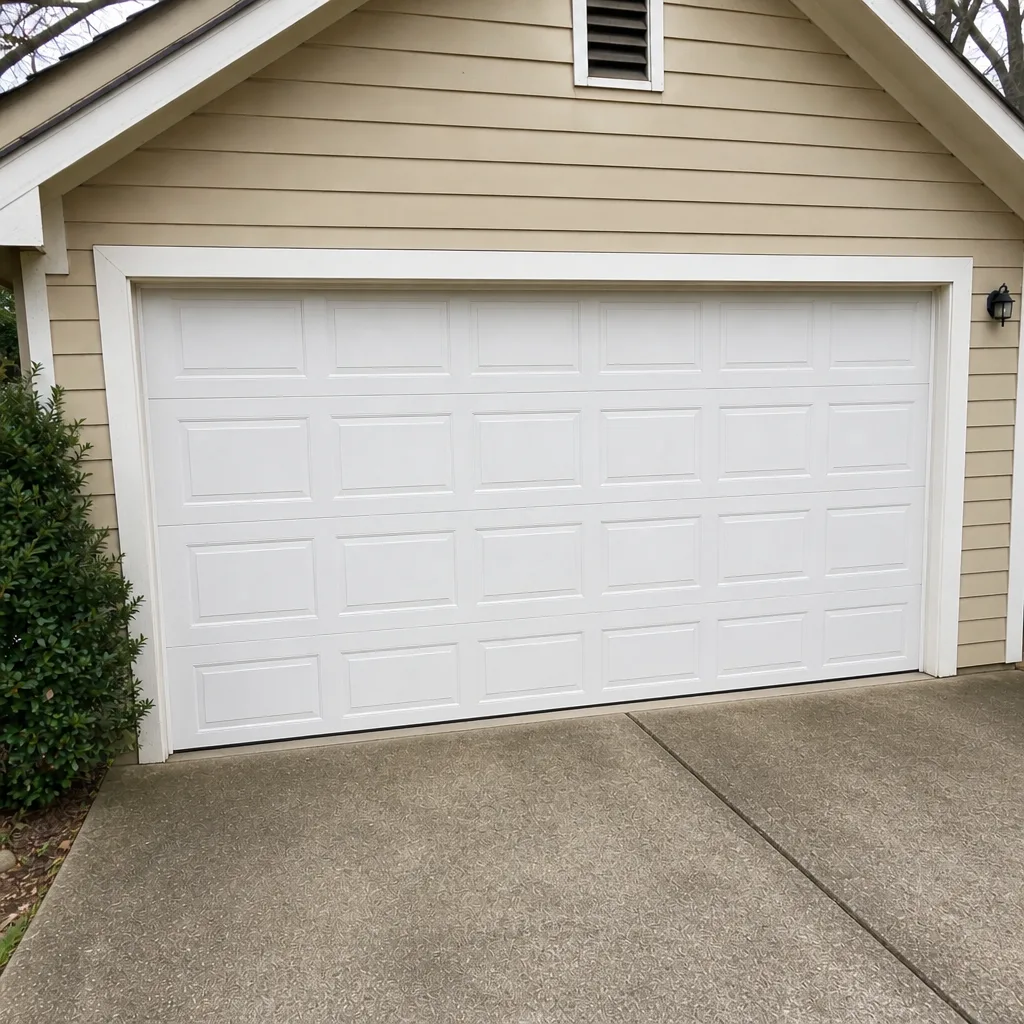 After
 Before
 After
 Before
 After
When to Call a Professional
Some garage door jobs are homeowner work: lubrication, inspecting and testing. Others belong to a technician. Call when you find a snapped or sagging spring, a frayed or rusty cable, a door that won’t open or close fully, a door that reverses on its own or stops partway, or an opener that runs but doesn’t move the door. If your door is more than 20 years old and you’re unsure whether to repair or replace, a professional can assess it before you spend. If you’re planning a replacement and wondering what a specific brand (Clopay, Amarr, Wayne Dalton, Raynor) offers, that’s worth a conversation too. Stonecrest Garage Door Repair offers free estimates in Stonecrest, and the estimate is free whether or not the door needs work. Call (877) 792-7296.
When you call, we answer. Fast dispatch runs from 7am to 7pm, Sunday through Friday, and crews are closed Saturday. If the door fails outside those hours, the call is booked into the next opening, so the door isn’t left waiting a business day past that.
Frequently Asked Questions
A garage door in Stonecrest typically lasts 15 to 25 years, but the hardware inside it, especially the springs, usually fails years before the panels do. The door itself is durable; the springs are rated in cycles (a standard spring is good for roughly 10,000 open-and-close cycles), and a family opening the door several times a day can reach that limit in under seven years. Call (877) 792-7296 for an exact quote on your door.
Springs fail on cycles, not years, and Stonecrest homes often shorten the timeline because many were built between 2000 and 2015 with builder-grade doors and springs sized for lighter use than the door actually gets. When the door carries a real family’s daily traffic, the spring reaches its rated cycle count early. If you suspect a spring issue, call and our team at Stonecrest Garage Door Repair can diagnose it. Estimates are free.
It means the technician arrives knowing how your system works, so the repair is done correctly the first time. We support doors and openers from eight major brands: LiftMaster, Chamberlain, Genie, Clopay, Amarr, Wayne Dalton, Craftsman and Raynor. Supported systems get a technician who knows their specific quirks and a repair that accounts for the actual make and model. Call (877) 792-7296 to name your brand and get an exact quote.
No. Garage door springs are under extreme tension, and handling them without the right tools and training can cause serious injury. Spring and cable work should always go to a trained professional. Everything else, such as lubrication and visual inspection, is fine for a homeowner. Call (877) 792-7296 for a free estimate on spring repair.
Yes, in a specific way. Georgia’s humidity and temperature swings drive condensation on metal parts, and red clay soil holds moisture against the bottom of the door, so cables, hinges and bottom brackets corrode faster than in a drier climate. That’s why inspection intervals here should be shorter than national advice suggests. Call (877) 792-7296 for an estimate if you’re seeing rust on your hardware.
The written estimate is the price, and the number doesn’t change once the technician arrives, because nothing is quoted until the issue is assessed and the work is agreed. Estimates are free, and we quote before any work starts. Call (877) 792-7296 for an exact quote on your door.
The Bottom Line
Garage door ownership in Stonecrest is a bit different from what the national advice describes. The springs in many neighborhood homes, especially those built between 2000 and 2015, are reaching the end of their rated cycles around the same time. Georgia humidity accelerates corrosion on the cables and brackets at the bottom of the door, and storm-season flexing works on the panels. A routine of regular inspection, sensible lubrication and prompt professional service keeps a door healthy for years. If something’s not right, or you just want a professional to look, our technicians are ready to help.
Call Stonecrest Garage Door Repair at (877) 792-7296 for a free estimate. We answer 24/7. Fast dispatch from 7am to 7pm, Sunday through Friday.
Written by the team at Stonecrest Garage Door Repair.